
ISO 9241-210:2019: A standard for the good design of interactive systems
- Garamantis
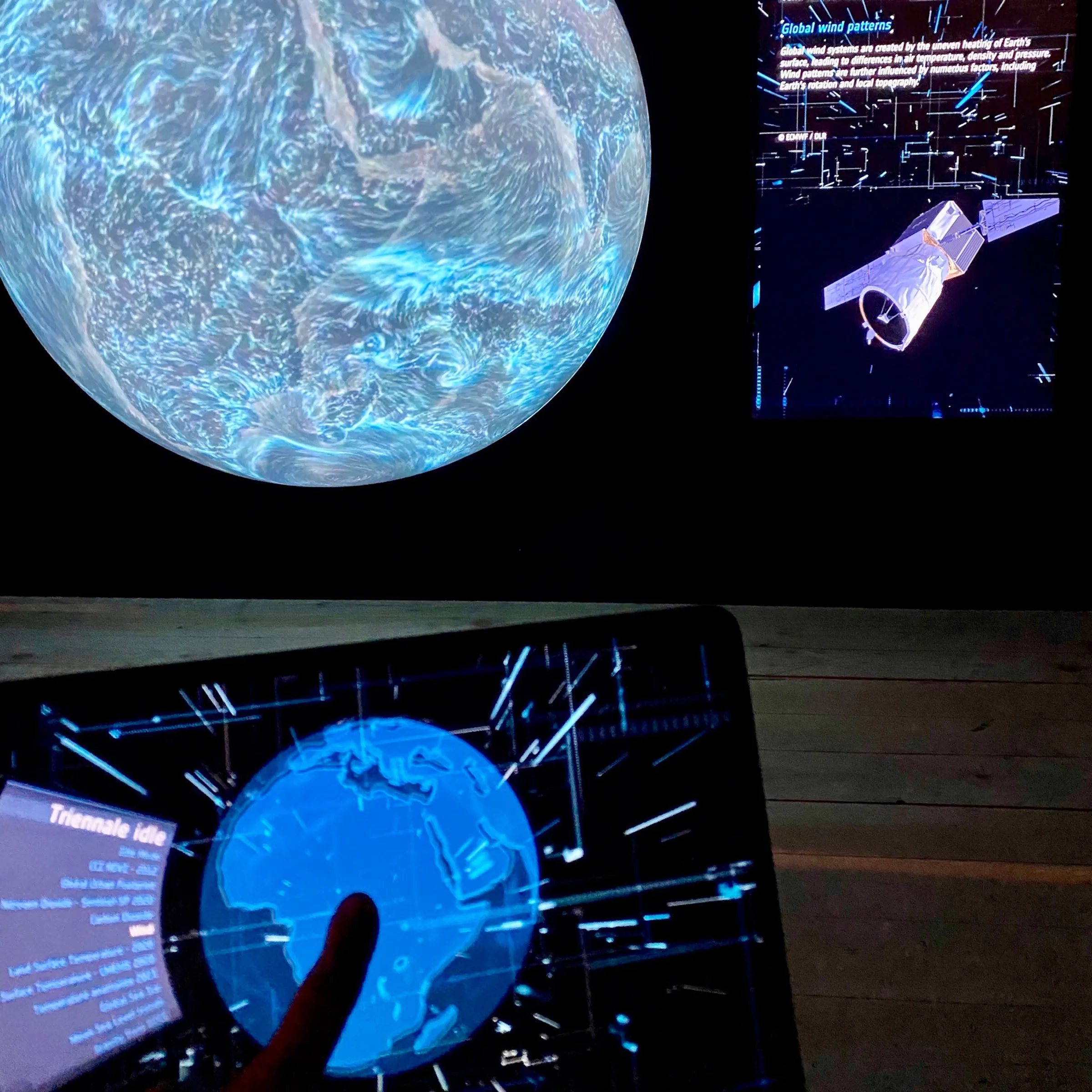
Imagine a visitor understanding your complex product more quickly from an interactive exhibit than from a 40-page presentation. Not because your PowerPoint presentation is lacking in information, but because the content is conveyed more effectively through an exhibit.
That is precisely the aim of human-centred design: to translate content in such a way that people can understand it intuitively.
The ISO 9241-210:2019 standard sets out the principles of this approach. It is therefore particularly relevant for corporate showrooms, multi-touch applications and interactive product presentations.
Ergonomics in human-system interaction
ISO 9241-210:2019 is an international standard for the human-centred design of interactive systems. It forms part of the ISO 9241 series of standards, which deals with the ergonomics of human-system interaction. The focus is on how digital systems can be planned, designed and developed in such a way that they provide meaningful support to people in specific usage situations.
The standard is not only relevant to traditional software. It can be applied to machine interfaces, touchscreens, multi-touch tables, media walls, digital exhibits, VR installations and interactive showroom applications.
The key idea is this: an interactive system is not automatically good simply because it works from a technical point of view. It must be understandable, usable, relevant and effective within its specific context of use.
This is particularly crucial when dealing with complex business content. After all, products, technologies, processes or data do not automatically become easier to understand simply because they are presented digitally. They must be translated in such a way that users can intuitively grasp them, explore them and make sense of them in a meaningful context.
The fundamental principle of “human-centred design”
In human-centred design, digital systems are consistently developed from the perspective of users, their goals, tasks and environment. The starting point is not the technology, but the context of use.
In practice, this point is often underestimated. Digital applications are frequently developed on the basis of existing content, technical capabilities or internal company structures. Whilst the result may contain a great deal of information, it is not automatically easy to use or understand.
ISO 9241-210:2019 turns this perspective on its head. The first question asked is:
- Who uses the system?
- In what situations is it used?
- What is the user aiming to achieve?
- What prior knowledge, expectations and limitations are there?
- What role do premises, hardware, content and operations play?
This makes a big difference for interactive applications. A visitor to a showroom has different needs to a sales representative giving a guided presentation. A group of visitors interacts differently to an individual user. A multi-touch table is perceived differently to a large media wall. Human-centred design systematically takes these differences into account.
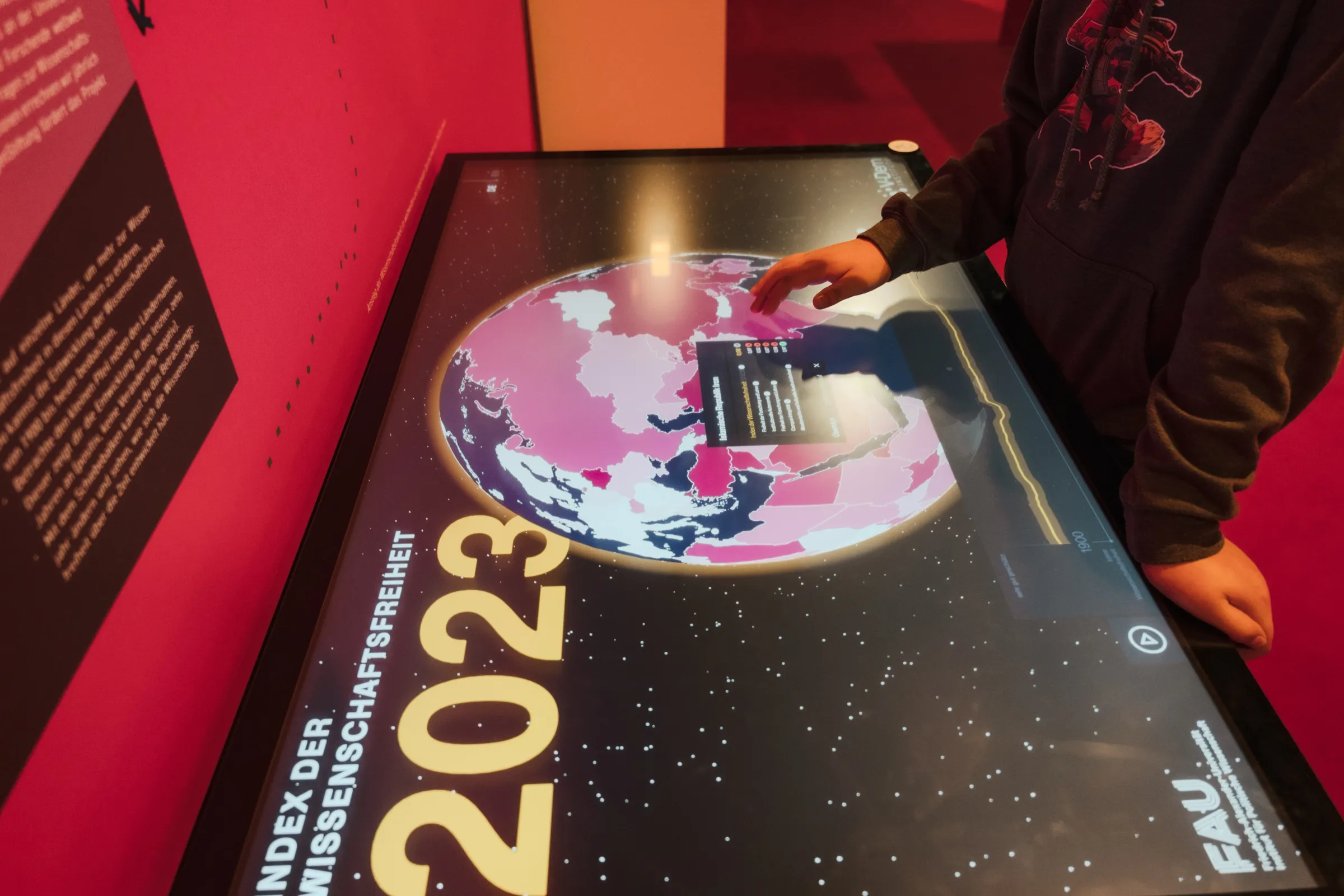
Photo: Ilja C. Hendel / Science in Dialogue
Usability, user experience and context of use
In the context of ISO 9241-210:2019, three terms are particularly important: usability, user experience and context of use.
- Usability describes whether users can achieve a goal effectively, efficiently and satisfactorily within a specific context. It therefore refers to a system’s suitability for use.
- User experience is a broader concept. It encompasses the entire user experience: expectations before use, navigation, understanding, emotional impact, trust, enjoyment, frustration and memorability.
- The context of use links both levels. It describes who uses a system, for what purpose, in what environment, with what prior knowledge, and under what technical or organisational conditions.
In the case of a multi-touch application in a corporate showroom, these might include, for example:
- User groups such as customers, visitors, sales staff, management or service staff.
- Spatial factors such as lighting, distance, display size, touch height and visitor flow.
- Technical factors such as hardware, sensors, the network, the CMS, data sources and operating mode.
- Content-related factors such as complexity, language, topicality and relevance to the target audience.
- Organisational factors such as content management, responsibilities, maintenance and scalability.
Only once this context has been understood can an interactive system be designed in a way that is truly appropriate.
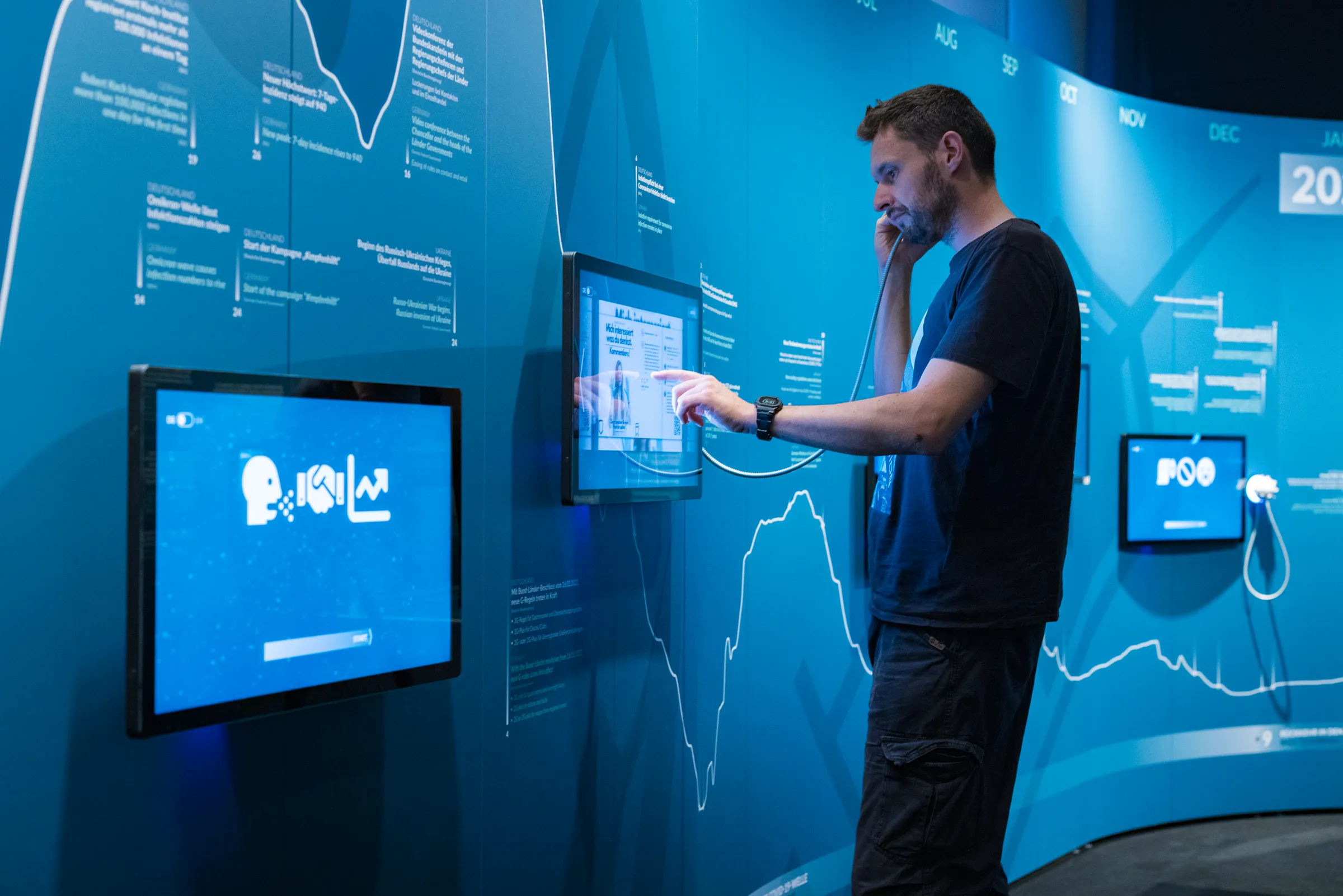
Photo: Museum of Communication, Kay Herschelmann
The five key principles of the standard
1. The design is based on an understanding of users, tasks and the environment
Good design, therefore, does not begin with layouts or technological decisions, but with analysis. Who uses the system? What task is it intended to support? What information is relevant? What is the situation on the ground?
For interactive showrooms, this means that the space, target audiences, content, presentation context and operational requirements must be understood before the interface, functions and technical architecture are defined.
2. Users are involved in the design and development process
User-centred design does not mean simply having a finished system tested briefly at the very end. User feedback should be incorporated early on and repeatedly, for example through workshops, prototypes, internal tests or observations in the context of actual use. Particularly with products that require explanation, it is often only when a prototype is available that it becomes clear whether terms, visualisations and interaction options are actually understood.
3. The design is improved through evaluation
Design decisions should not be based solely on personal taste or assumptions. They must be verifiable. Can users find the content? Do they understand how to use it? Is the intended message being conveyed? Does the application work effectively within the context? An evaluation can take the form of an expert review, a usability test, a click-path analysis, observation or an analysis of usage data.
4. The process is iterative
Human-centred design is not a linear process. Findings from tests and prototypes are fed back into the concept, design and development. This is particularly important in the case of interactive systems, as they involve the convergence of many different elements: interface, space, content, hardware, sensors, performance, lighting, sound and human behaviour.
5. The overall user experience is taken into account
What matters most is the overall experience: from the first glance at the exhibit, through the start of the interaction, to a deeper engagement with the content. For corporate showrooms, this also means that idle mode, activation, free exploration, guided presentations, group interaction and a return to the initial state must all be considered as an integrated whole.
Implications for multitouch software and corporate showrooms
Multitouch software highlights just how important human-centred design is. The technical ability to recognise multiple touches simultaneously does not, in itself, make for a good application. What matters is the interaction that results from it.
A poorly designed multi-touch application can quickly appear cluttered. The content is crammed together; the functions are technically available, but users don’t know where to start. Attention spans are particularly limited in showrooms or at trade fairs. The application must therefore provide immediate guidance, encourage initial engagement and, at the same time, allow for a deeper exploration.
Human-centred design helps to strike this balance:
- A quick start for first-time users
- In-depth content for experts
- Clear interaction patterns for touch-based operation
- Clear display on all media
- Effective support from multiple users
- A combination of independent exploration and a guided tour
- Integration with CMS, data sources and existing systems
Corporate showrooms present a particularly challenging usage context. They serve as a brand space, a presentation tool, a sales support facility and, at times, a training environment all at once. Different user groups interact within the same technical environment: customers, partners, job applicants, the press, internal teams, management and specialist departments.
ISO 9241-210:2019 helps to translate this diversity into design in a structured way. For a showroom, the following questions, amongst others, arise:
- What sort of people visit the venue?
- What message do you want visitors to take away from their visit?
- Which content should be freely accessible, and which requires moderation?
- What role do touchscreens, media walls, lighting, sound and sensor technology play?
- How does a presentation begin and end?
- How is content updated?
- What other systems need to be integrated?
This is how a robust concept is created. The software is not viewed as an isolated interface, but as part of a spatial experience.
Conclusion
ISO 9241-210:2019 provides an important framework for the development of interactive systems. The standard makes it clear that good digital applications are created through a systematic understanding of people, tasks and the context of use.
This approach is particularly relevant for multi-touch software, corporate showrooms and interactive product presentations. These settings bring together complex content, diverse target audiences, spatial design and technical systems. A compelling solution can only be achieved when these factors are considered as a whole.