
Showcasing your business: bringing innovation to life and winning over customers
- Showroom
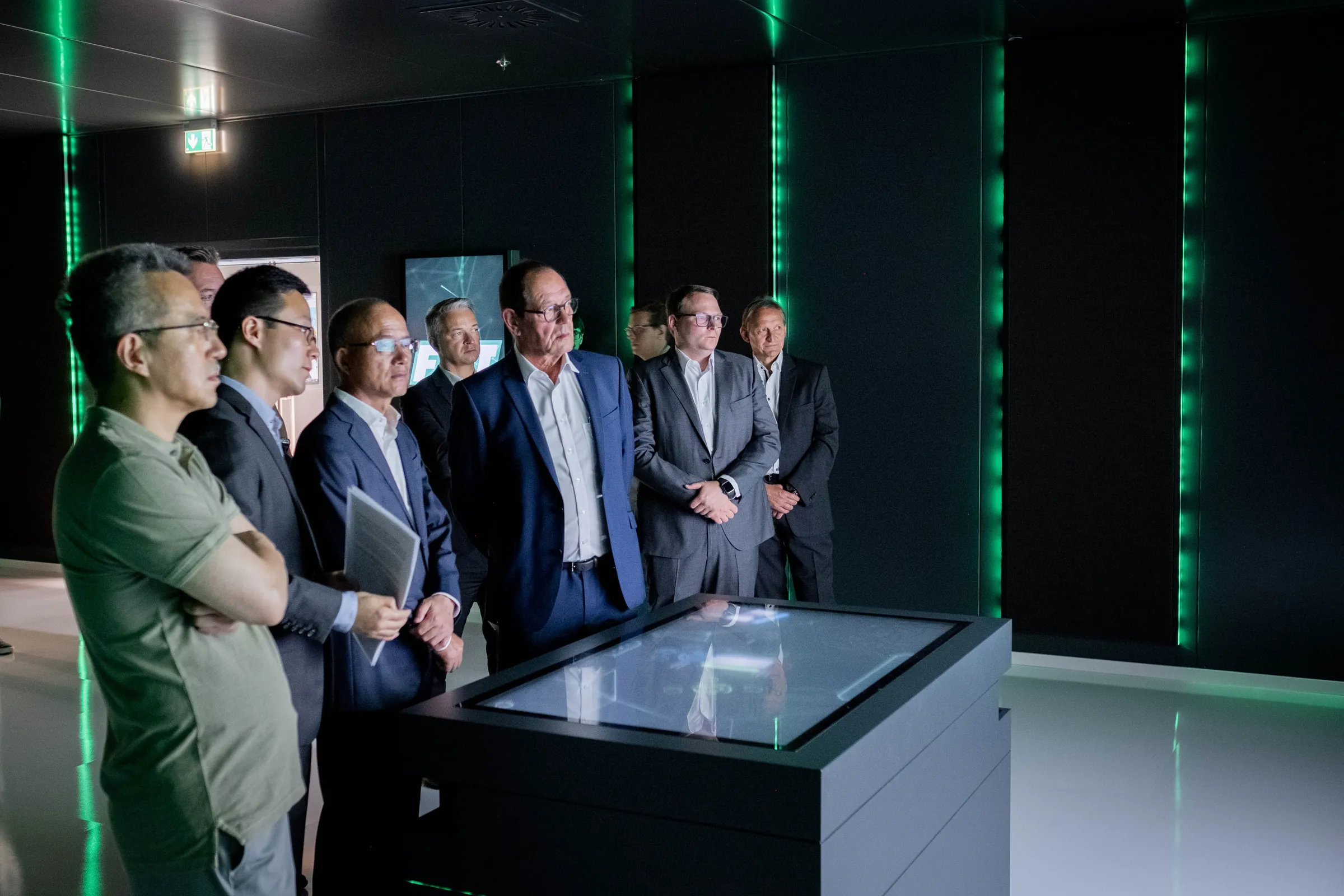
Your state-of-the-art production facilities, your development expertise and your technologies are compelling selling points. At your own company premises, customers can see for themselves what goes on behind the scenes: how you manufacture products, ensure quality and develop new solutions. For anyone wishing to showcase a manufacturing company, this offers an ideal setting for turning promises of performance into compelling insights.
For medium-sized and large industrial companies, a showroom is therefore a strategic location for sales. It gives existing customers a reason to discover further capabilities and applications. At the same time, it provides an attractive setting for inviting new customers and companies that have previously purchased from competitors.
On your own premises, you can tailor the conditions for this visit. The venue, lighting, media, actual products and demonstrations can all be adapted to suit your guests. Specialists from development and production can be brought in as required. The laboratory, technical centre or production facilities provide the relevant evidence. This combination makes the company headquarters a particularly compelling venue for a corporate presentation.
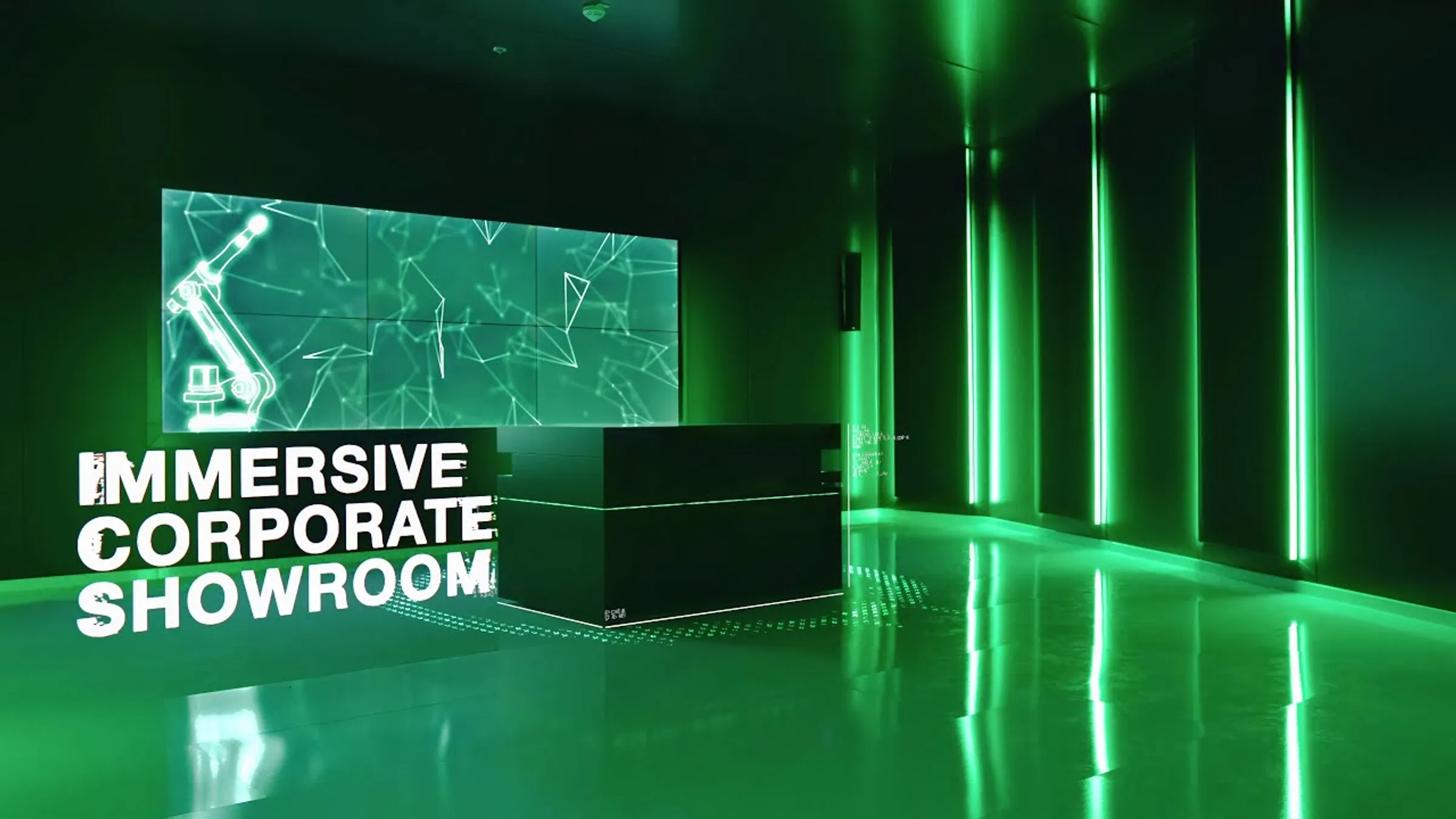
An interactive corporate showroom brings all these possibilities together: it helps visitors understand our innovative capabilities, sparks discussions about specific applications and paves the way for the next step in the customer relationship.
What makes for a compelling company presentation?
A company presentation explains what problems your company solves, how it operates and why it makes sense to work with it. The company’s history, locations and key figures should be included where they support these points.
The following structure is recommended for industrial companies:
Key questions from customers
Relevant content
Do you understand the challenge we face?
A specific application or typical task for the target group
What can you do for us?
Relevant products, processes and services
How does your solution work?
Demonstration, model, visualisation or insight into production
What sets your company apart?
Demonstrable strengths in development, manufacturing, quality or service
Where has this proved successful?
Published references, test results and case studies
How do we move forward?
Workshop, sample provision, technical consultation or quotation
This structure works just as well in a short presentation as it does in an interactive company presentation. In the showroom, you can also select and explore individual topics in greater depth according to your interests.
Why our location offers a unique opportunity
At a trade fair, you have to share the spotlight with other exhibitors. During an online meeting, your customers see only a limited snapshot. At your company’s headquarters, you can present a comprehensive picture of your capabilities.
You determine the sequence of events, from the welcome to the closing discussion. A showroom first helps visitors get their bearings: What expertise does the company have? Which technologies are relevant to the visitors? Selected points can then be demonstrated in practice on the production floor or in the laboratory.
This interaction is particularly valuable when it comes to services whose quality is difficult to assess from the outside. The depth of development, process reliability and manufacturing precision become more tangible when customers can see relevant examples and speak to the experts responsible.
To achieve this, the site visit needs to be carefully curated. A tour of all departments is rarely the best way to showcase the company. What matters most are the stops that offer a clear benefit to the specific target audience.
Dieser Inhalt wird von einem Drittanbieter gehostet. Durch das Anzeigen des externen Inhalts akzeptieren Sie die Nutzungsbedingungen von youtube.com.
Build on our existing customer base and attract new customers
A showroom project should begin with specific sales objectives. Three reasons for visiting are particularly relevant.
Show existing customers what else we can do
Many customers first become familiar with a supplier through a specific product or business area. A visit to a showroom can highlight which other applications, development services or other services might be of interest to them.
You should therefore plan your visit around your existing working relationship: What is the customer already using? What related tasks could you also help with? What new developments would justify another meeting?
Offer new customers a reason to visit us for a technical consultation
An invitation becomes more valuable when it promises a specific focus: an application day, a technology demonstration, a workshop or a joint examination of a production task.
The showroom provides a setting in which prospective clients can get to know your company whilst also gaining something useful for their own work.
Making the differences between competitors clear to customers
Companies that already buy from other suppliers need a good reason to consider an alternative. Use specific requirements to demonstrate the opportunities your solutions offer.
Relevant factors include, for example, integration into existing processes, ease of maintenance, material properties and development support. Demonstrate any differences through demonstrations and verifiable data. General claims of superiority are no substitute for a technical assessment.
Presenting innovation and modern production in an accessible way
Innovation becomes compelling when guests recognise the benefits it brings. A new technology should therefore be linked to its application and a relevant example.
What you would like to show
How it becomes clear
Automated production
A process model illustrates material flow, processing and human intervention.
Precision and quality assurance
A component is associated with measurement methods, tolerances and approved test results.
New materials
Patterns make characteristics comparable; digital content explains applications.
Connected manufacturing
A visualisation shows what data is collected and how it is used to inform decisions.
Development expertise
Prototypes and tests illustrate the path from requirement to solution.
Resource consumption
Reliable comparative data explains consumption, the broader context and potential savings.
Not every process can be demonstrated in real time. Some plants are too large, certain processes take place inside a machine, and other information is confidential. This is where animations, interactive models and approved demonstration data come in handy.
An interactive product presentation can link these levels: visitors view a real product and, whilst doing so, can explore precisely those features, variants or process steps that interest them.
Example: Presenting an industrial company in five minutes
The following fictional example illustrates a possible starting point for a manufacturer of automated testing systems. The five minutes are intended to provide an overview; this is followed by a more in-depth discussion.
1. Open the customer order
“You need to test different components reliably and switch over your production quickly when new variants are introduced. Today, we’ll show you how our testing systems combine these two tasks.”
This marks the start of the user experience. Guests can immediately see why the visit is relevant to them.
2. Classify companies and areas of expertise
Briefly describe the systems you develop, the sectors you work in and the services you provide yourselves. Select only the company details that will inspire confidence in relation to this task.
3. Demonstrate the solution
A real component triggers an interactive demonstration. Visitors can follow the test procedure, select a different variant and see what adjustments are required.
4. Provide evidence to support the statement
Please provide relevant test results or an approved reference. Please also explain the conditions under which the results were achieved.
5. Move on to the discussion with the customer
“Which component variants and test requirements are particularly important to you? We can go through these together now and then explore them in more detail at the technical centre.”
This turns the company presentation into a discussion about the guests’ specific role.
Planning the showroom visit as a cohesive experience for customers
For project managers, the entire visit constitutes the planning unit. The showroom, meeting area and any factory tour should build on one another.
A sensible process consists of five stages:
- Introduction: Guests realise what the theme is and what benefits they can expect.
- Getting started: A brief overview categorises companies, skills and relevant applications.
- Discover: Products, demonstrations and interactive content help to explain selected services.
- Go into more depth: technical discussions, laboratory work or production can provide answers to specific questions.
- Agree: The host and guests agree on the next step.
For existing customers, the overview can be brief, whilst a more in-depth explanation can be provided for new applications. New customers usually require more context. International groups need appropriate language versions.
The guide *Designing an Exhibition Space: Nine Steps to a Compelling Showroom* explains how these elements can be used to inform interior design, visitor flow, media and operations.
PowerPoint, an interactive presentation or a showroom?
The right format depends on the occasion, content and intended use.
Format
Particularly suitable for
To be taken into account
Traditional presentation
Online appointments, brief initial consultations and internal coordination
Keep content clear and organised, and be flexible in addressing questions
Interactive exhibit
Individual products and applications at trade fairs or in the foyer
Create a clear introduction and user-friendly interaction
Mobile presentation system
Roadshows and changing venues
Plan for transport, set-up and support
Corporate Showroom
Regular customer visits and complex industrial quotations
Developing content, premises, technology and sales processes together
Three examples from Garamantis’s practice
Wack Group: Understanding the procedure and preparing for the laboratory visit
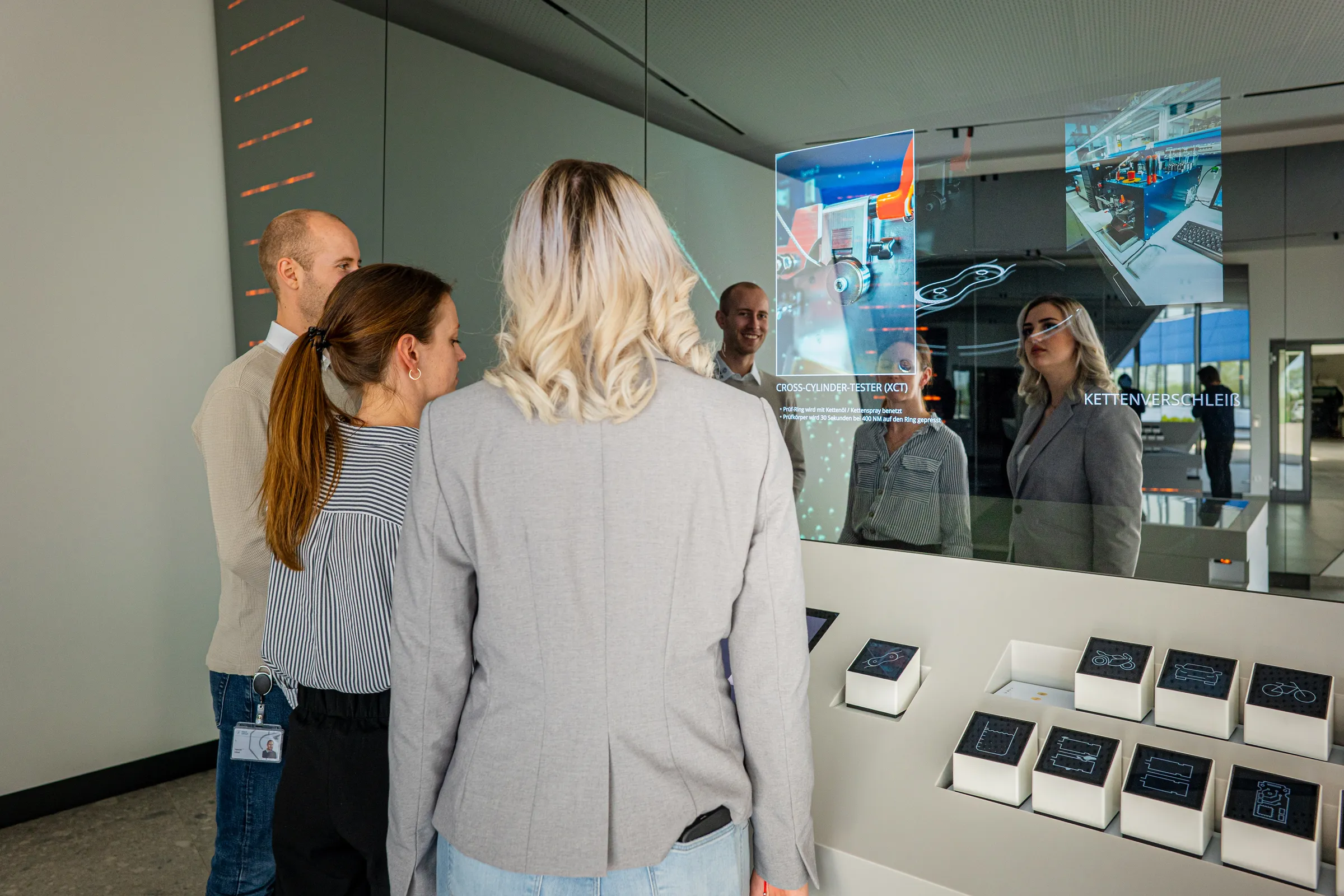
Garamantis developed a corporate showroom featuring four interactive stations for the Wack Group. The tour combines the company’s history, product ranges and analytical methods, and prepares visitors for their subsequent visit to the laboratory and technical centre.
The analysis station makes processes accessible via selectable ‘analysis cubes’. A specially developed display combines transparent OLED touchscreens, an LED film and a moving layer of glycerine. The project demonstrates how industrial expertise can be conveyed through intuitive interaction and a distinctive spatial design.
Lingemann: Exploring procurement processes together
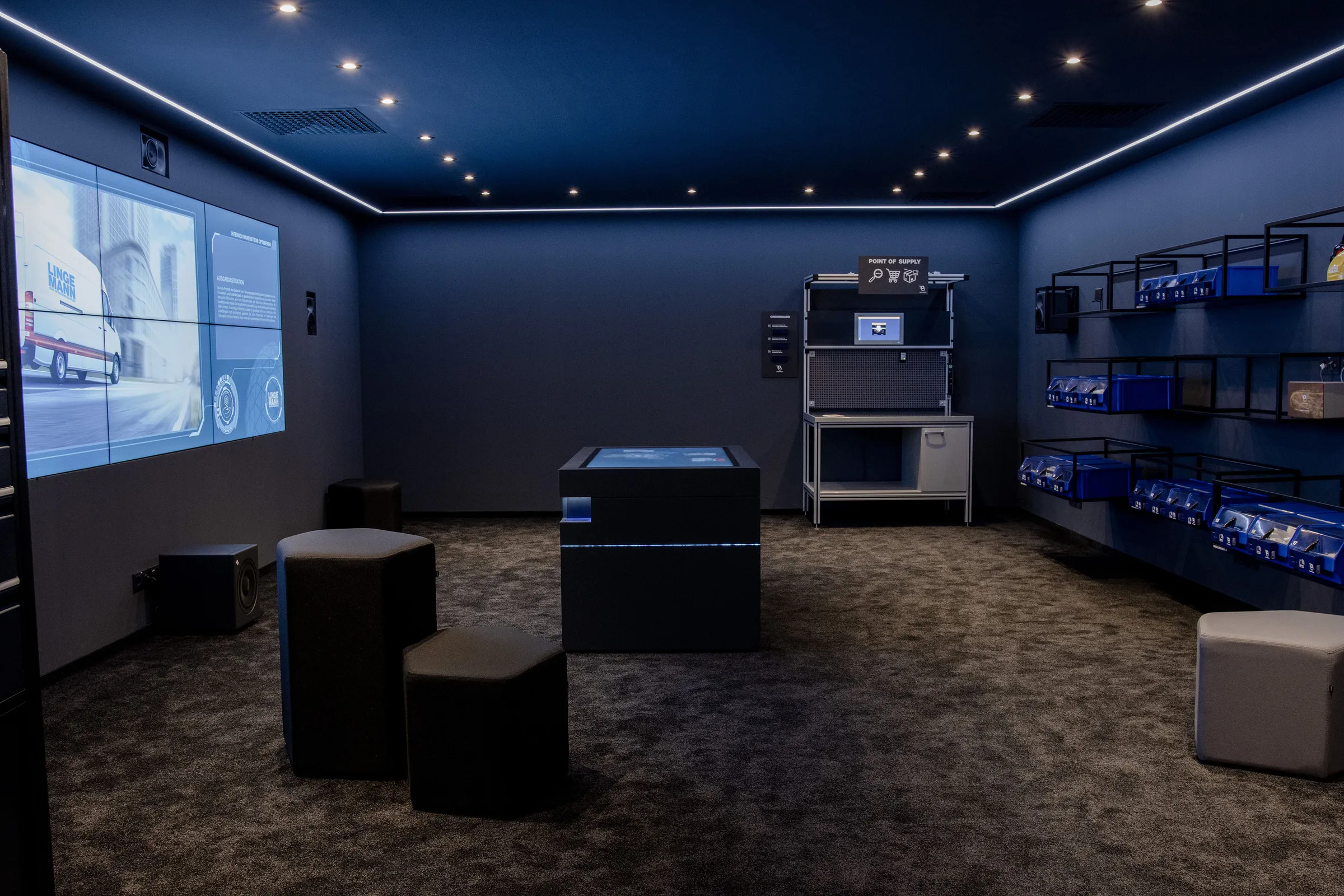
In Lingemann’s Procurement Future Showroom, a multi-touch scanner table, a screen wall, real IoT products, as well as lighting and audio are all interconnected.
An interactive configurator enables IoT solutions to be placed within a simulated production environment. Hosts and guests can move from an overview of the company to specific procurement queries. Covering an area of around 55 square metres, this creates a presentation environment that brings together real products and digital processes.
Daikin: Entering the portfolio via applications
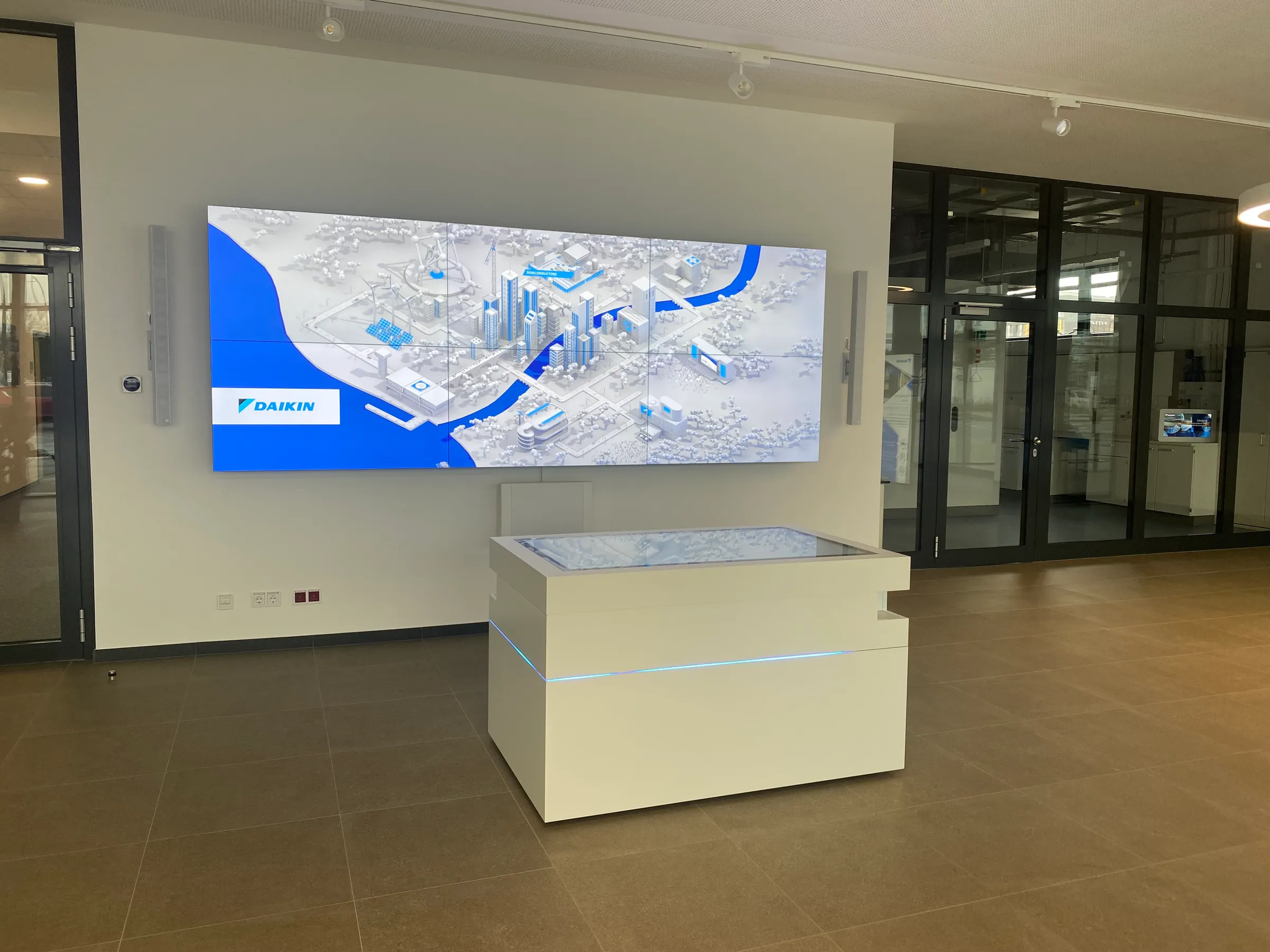
Garamantis designed and planned an interactive showroom featuring a multi-touch table and a linked screen wall for the Daikin Chemical Europe Innovation Centre.
A three-dimensional city visualises industries relevant to Daikin Chemicals. This gives visitors an introduction to the areas of application for high-performance chemical products. The example illustrates how a broad portfolio can be explored from the perspective of its applications.
What project managers should clarify before implementation
A successful showroom requires a joint briefing involving sales, marketing and the relevant specialist departments. Agree on the following points at an early stage:
- Sales objective: Which customer relationships and business areas should the showroom support?
- Reasons for visiting: Why should customers come for the first time or be invited back?
- Content and supporting documentation: Which applications, products, references and data are relevant and have been approved?
- Use: Who is giving the presentation, how large are the groups, and how is the visit prepared?
- Site integration: Which areas of production, the laboratory or the pilot plant can be integrated?
- Technology and accessibility: What user interfaces, languages, subtitles and alternative ways of providing information are required?
- Operations: Who is responsible for updating content, managing the technical aspects and training the presenters?
- Measuring success: How are follow-up meetings, workshops, sample requests and new project enquiries recorded?
A CMS can make it easier to manage the texts, media and presentation options intended for use with it. New functions or interactions may require further development.
Garamantis combines concept, design, software and system integration with the implementation and support of interactive presentation spaces.
Frequently asked questions about presenting a business
How do you present an industrial company in a compelling way?
Start with a relevant client challenge. Then explain your areas of expertise and use products, demonstrations and supporting evidence to show how you would tackle this challenge. At your own premises, you can combine the company presentation with technical discussions and insights into production or development.
How does a showroom help to maintain existing customer relationships?
It highlights further applications, technologies and services that customers may not have been aware of before. New content provides a reason for repeat visits and discussions about additional tasks.
How does a showroom create an opportunity to attract new customers?
Link the invitation to a professional benefit: a demonstration, a product trial day or a workshop. The showroom provides the ideal setting to showcase your company and explore your guests’ requirements in more detail together.
Does every company presentation have to be interactive?
No. A short, well-structured presentation may be sufficient for an initial introduction. Interactive content is particularly helpful when guests need to compare options, understand complex processes or select different topics themselves.
How can the impact of a showroom be assessed?
As well as recording visits, also document the resulting next steps: follow-up technical discussions, workshops, sampling, quotations and new project enquiries. This information helps to further develop content and visit procedures in a targeted manner; however, on its own, it does not yet demonstrate a direct impact on turnover.