
ESA exhibition ‘Spaceship Earth’
Experience satellite data interactively at the Ars Electronica Centre
How can complex scientific data be presented in such a way that visitors can explore it intuitively whilst also experiencing the wonders of our planet?
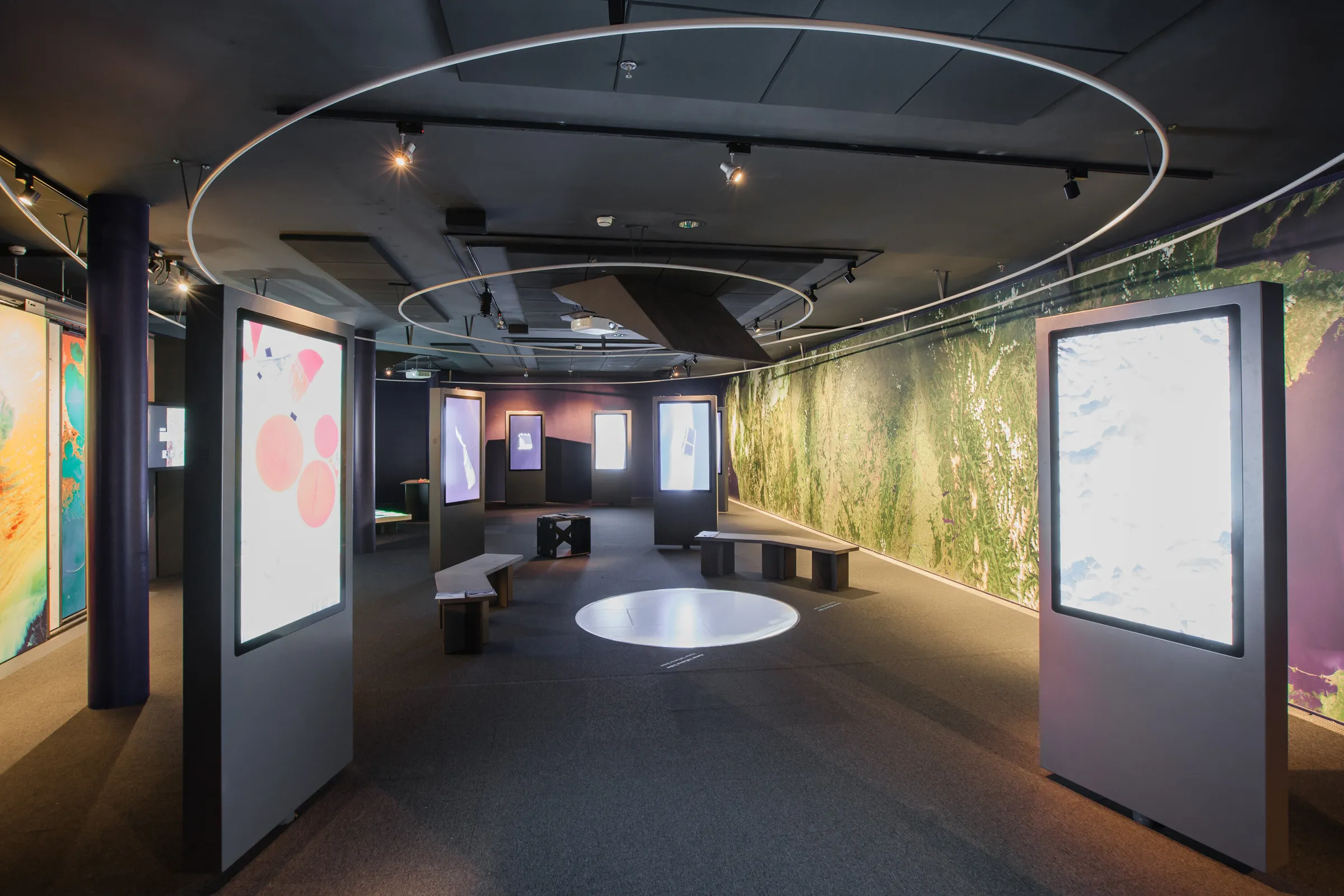
For the ‘Spaceship Earth’ exhibition at the Ars Electronica Centre in Linz, Ars Electronica Solutions, in collaboration with the European Space Agency (ESA), developed an interactive experience centred on Earth observation. As part of this project, Garamantis developed, amongst other things, bespoke multi-touch software for seven rotatable touchscreens, as well as a content management system for managing the exhibition content.
The focus was on spectacular satellite images of the Earth and the stories behind them: changes to landscapes and cities, air and water quality, agriculture, vegetation, glacial melt, and the effects of natural disasters and climate change.
Seven rotating screens as windows onto the Earth
The exhibition’s central interactive concept combined digital content with an unusual form of physical navigation: seven freely rotatable multi-touch steles were arranged around a model of the Earth. By rotating a screen, visitors could decide for themselves which part of the Earth they wished to explore. The software developed by Garamantis detected the respective angle of rotation and displayed corresponding satellite images, geographical contexts and further information.
As a result, the movement of the display itself became the interface: rather than selecting content solely via menus and buttons, visitors were able to literally explore the Earth through physical movement.
The multi-touch interface then allowed individual images and topics to be examined in greater detail. This created a playful way of engaging with scientific data, enabling both a quick visual overview and a more in-depth exploration of the content.
When satellite images tell stories
Satellites provide far more than just impressive images of our planet. Their data helps, for example, to analyse changes in vegetation, monitor air and water quality, track developments in agriculture, and document the melting of glaciers.
‘Spaceship Earth’ made these connections immediately apparent. Satellite images were not presented in isolation, but were linked to scientific background information and specific stories.
Visitors were thus able to discover, amongst other things, phenomena such as phytoplankton in the Barents Sea, large-scale irrigation systems in Spain and the ash clouds from the Icelandic volcano Eyjafjallajökull, as seen from the perspective of Earth observation satellites.
The exhibition thus combined science communication, striking visualisation and interactive museum technology to create a shared experience.
Accessible interaction for different visitor groups
In a public exhibition, digital applications must be intuitive for as wide a range of people as possible to use.
That is why Garamantis also developed a special operating mode for children and wheelchair users. With the press of a single button, all the interactive controls on the screen could be moved to a lower, easily accessible position.
Accessibility was therefore not added as an afterthought, but integrated directly into the exhibition’s interaction design.
Manage content flexibly via a CMS
In addition to the visitor application, Garamantis developed a content management system for the exhibition.
This enabled the satellite images and supplementary information on display to be managed and updated centrally. As a result, the editorial content remained separate from the exhibition software itself – an important advantage for exhibitions whose themes and data change over time.
The start of a long-running ESA project
“Spaceship Earth” opened in September 2015 and went on to become one of the Ars Electronica Centre’s most successful exhibitions. The project also served as an early starting point for further interactive educational formats centred on theESA’s Earth observation programmes.
In the years that followed, Garamantis was also involved in further projects for ESA exhibitions and visitor centres – ranging from interactive multi-touch applications and globe installations to large-format projections and immersive experience spaces.
Products used
Multitouch software
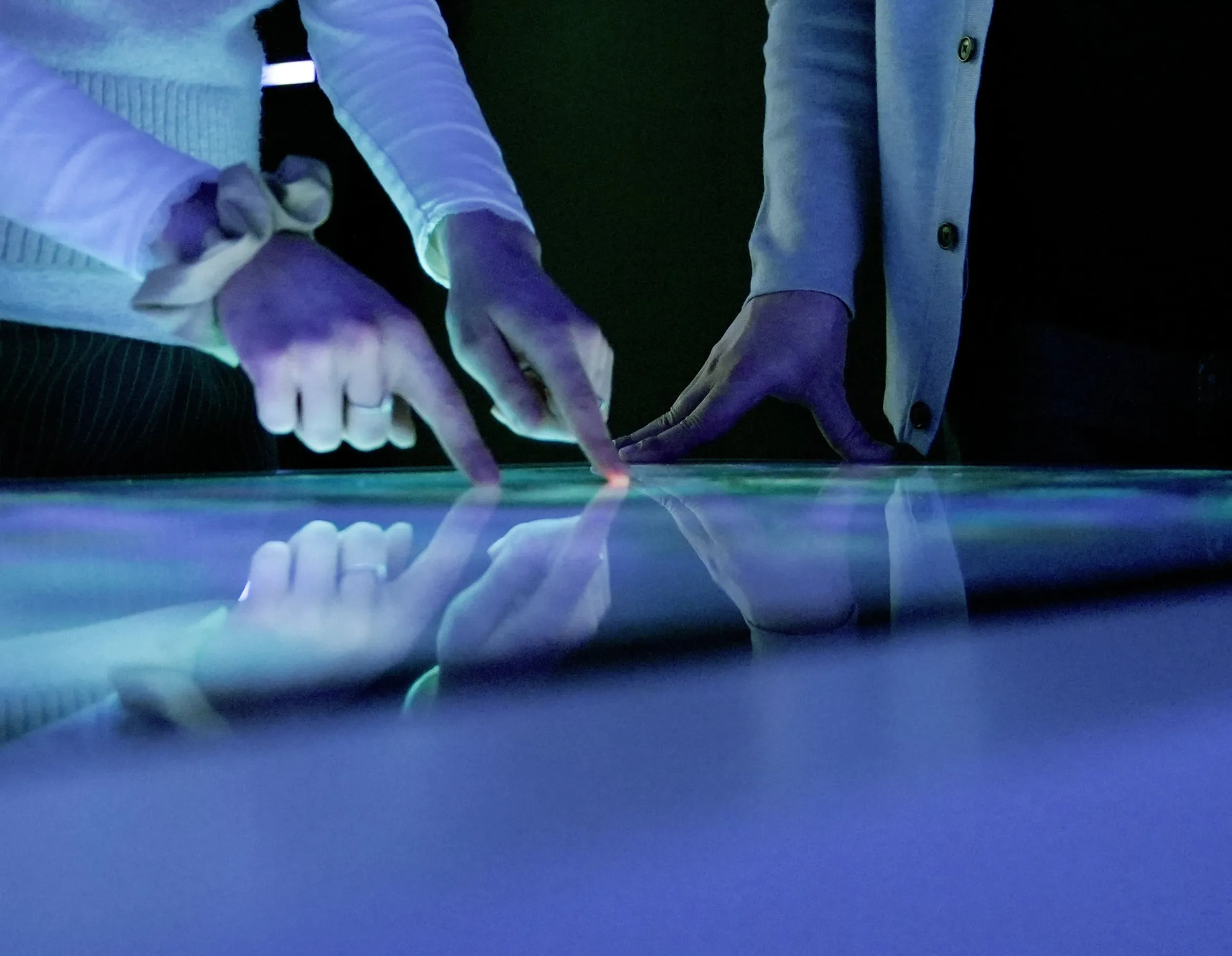
Multitouch software for interactive exhibitions. Bespoke software development in Unity 3D.
Multi-Touch Revolving Monitor 360°
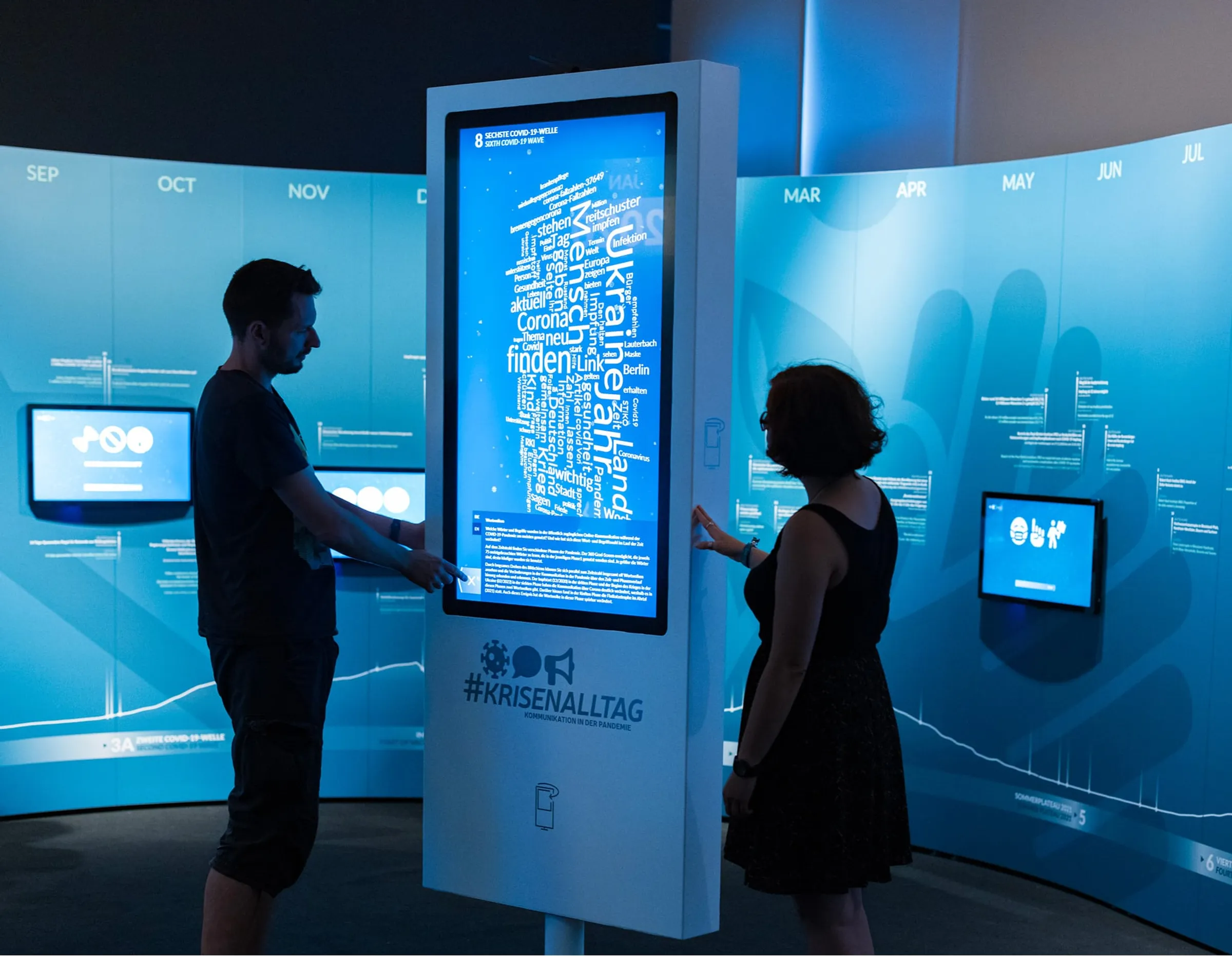
Why the world revolves around your content. Intuitive and immersive 360° viewing.