
Brand Worlds for Businesses: A Guide from Strategy to Operations
- Showroom
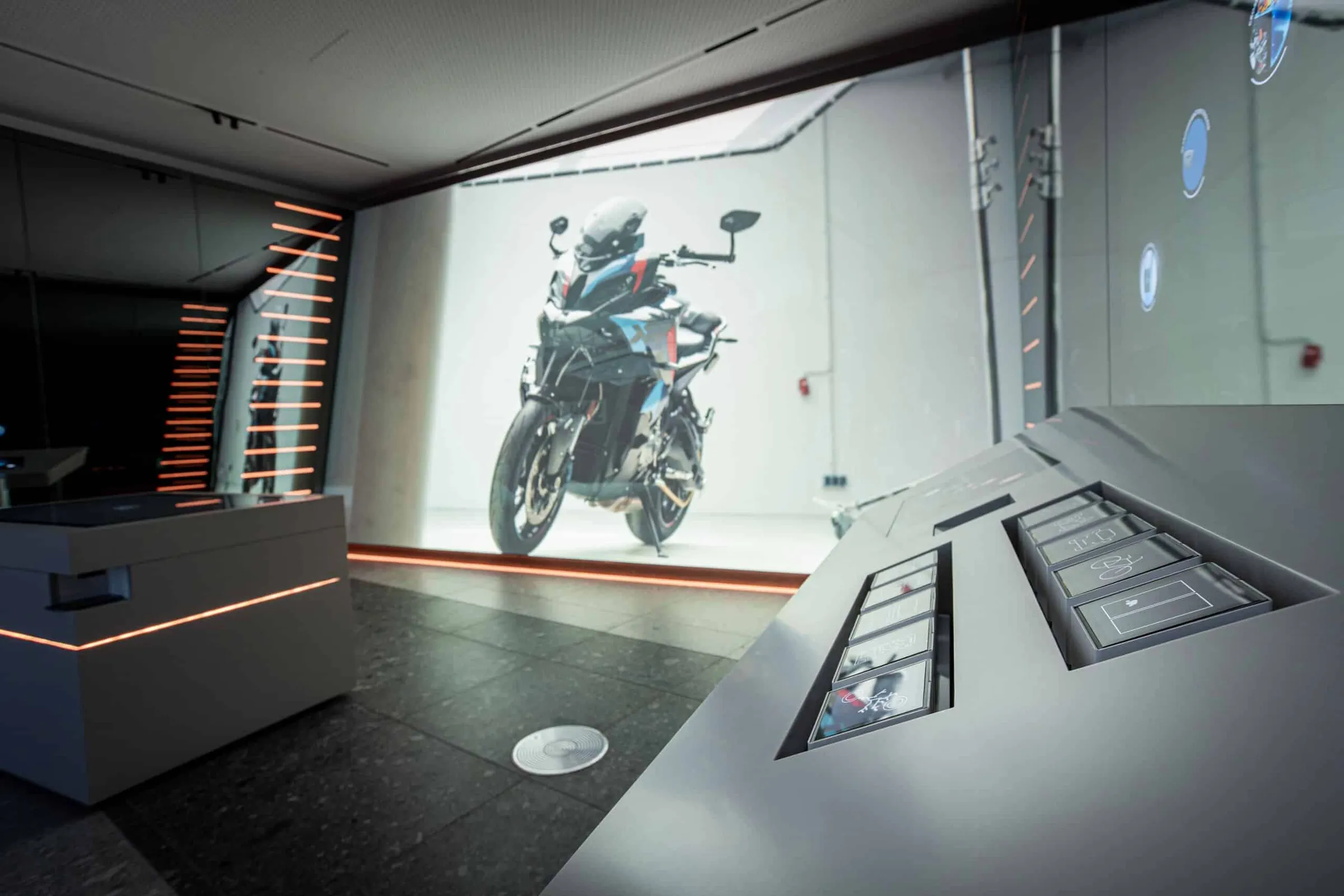
Brand experiences are no longer merely a marketing tool. For many companies, they have become strategic business tools: they support sales, speed up decision-making processes, make complex products easier to understand and create a physical space where the company can be experienced first-hand. Such physical touchpoints can be a decisive moment in the customer journey, as they can simultaneously generate attention, build trust and create momentum for decision-making.
At the same time, many brand experiences fail due to the same issues: they are visually impressive but operationally weak. Content becomes outdated, technology is not updated, and the space is rarely used. The reason for this often lies in the same fallacy: brand experiences are planned as a space or an exhibition – not as an interactive system.
This guide shows how companies can properly plan, implement and operate brand experiences in the long term – with a focus on experience design, software, content and measurable impact.
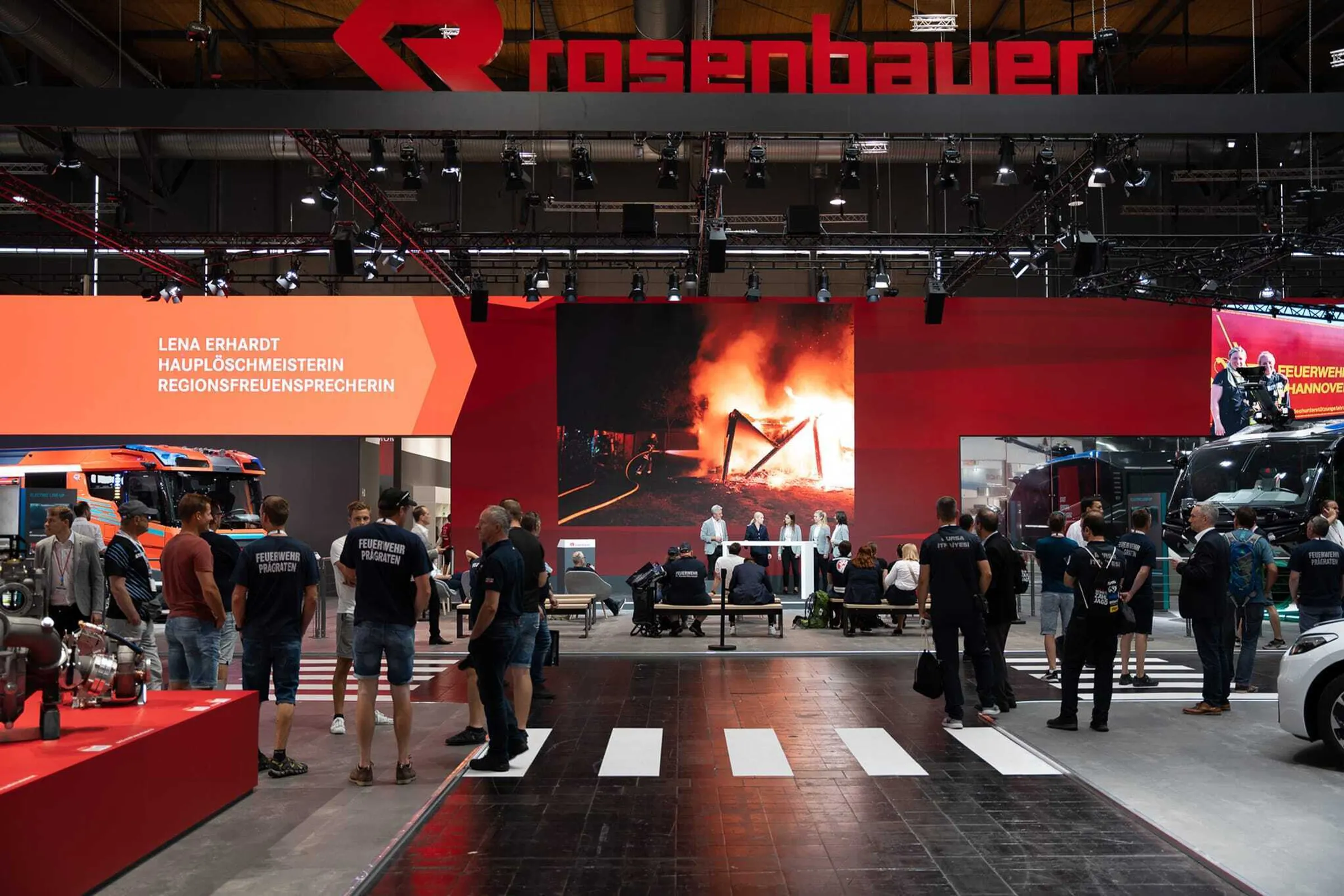
Modern brand experiences are no longer merely museum-like exhibition spaces. They are highly digital and interactive. This means they actively engage visitors in the experience and present content that is updated daily.
What is a brand universe?
A brand experience is a permanently installed, physical space that brings a company’s identity, values and capabilities to life. It is aimed at clearly defined target groups and supports specific business objectives such as marketing, sales, partnerships, recruitment or transformation. In a brand experience, visitors can immerse themselves in the company’s corporate identity.
Unlike traditional presentation spaces, a professional brand experience is not based purely on display, but on a planned logic of interaction and experience. Visitors should not only see the content, but also understand it, contextualise it and relate it to a decision-making context. This is a significant advantage, particularly when dealing with products that require explanation, complex services or abstract innovation topics.
Distinction from related terms
The term ‘brand world’ is often used in a vague way. A clear definition is helpful for planning purposes.
- Showroom – Focus on products or services; often closely linked to sales and designed for presentation purposes.
- Exhibition – Focus on content and education, often more linear and passive.
- Brand World –A holistic experience for different target groups, featuring clear narrative structure, interaction, guidance and a business perspective.
A brand world is not merely a ‘wow factor’ space, but a strategic tool for communication, guidance and decision-making.
Why companies create brand worlds
Companies invest in brand experiences when traditional communication formats reach their limits. This is typically the case when products or services are innovative, complex and require explanation. In such situations, a physical space becomes the key communication format, as it brings together content, interaction and experience within a single setting. It appeals to numerous senses of the visitors simultaneously. Combined with a personal welcome from company staff, this creates an immersive overall experience within the space.
5 Typical objectives of brand worlds
A professionally designed brand identity can serve several purposes at once:
- Explain complex solutions in an accessible way and speed up decision-making
- Bringing strategy, innovation or transformation to life at management level
- Engage and involve partners, customers or staff
- Bringing corporate culture and employer brand to life
- Presenting future-oriented topics in a credible and multi-sensory way
The real added value does not lie in brand experiences simply presenting information passively. Rather, they deepen understanding, build trust and take conversations to a whole new level.
For which companies is a brand universe particularly worthwhile?
Brand experiences are particularly useful for companies,
- whose services require a high level of consultation,
- who need to explain innovations or complex systems,
- who wish to cater for different target groups in a single room,
- who wish to integrate sales, marketing and brand management more closely,
- who regularly receive customers, partners or applicants on-site (for example, at the company’s head office or a key production site)
Brand experiences are particularly effective wherever products, services or brand values require further explanation and traditional presentations are no longer sufficient.
Take relevant stakeholders into account at an early stage
Brand strategies almost always involve several departments simultaneously: corporate communications, marketing, sales, senior management, HR, IT, facilities management and others. Many projects fail not because of the idea itself, but because these stakeholders are involved too late or not sufficiently.
In practice, it is evident time and again that successful projects do not begin with hardware, but with a thorough needs analysis. This involves considering target audiences, group sizes, duration of programmes, key themes, integration into the organisation and measurable objectives.
Why experience-based logic is more important than design or technology
The logic of the experience is the key factor in the success of any brand world. It describes the interplay between content, interactions, space and technology to create a coherent and purposeful experience.
A successful brand world is not simply a room full of screens, but an interactive system. What matters is not the technology used, but how it is integrated into the narrative structure, visitor flow and communication objectives.
What ‘experiential logic’ actually means
‘Experience Logic’ answers the following questions, amongst others:
- How does an experience begin – and how does it end?
- What role do visitors, groups, guides or experts play?
- What content is shown, when, to whom and in what depth?
- How does the system respond to interactions between the groups?
- When is a guided tour a good idea – and when is it better to explore on your own?
This logic determines whether a brand universe is flexible and scalable – or whether it loses its impact after just a few months.
Software at the heart of the brand world
In professional brand environments, software is not merely a means to an end, but the central orchestration tool. It controls content, media stations, lighting, audio and often the space itself.
Centralised control and a suitable content management system (CMS) are crucial for long-term operation. This enables stations to be managed, content to be updated, lighting and audio to be integrated, and different content presets for target audiences to be activated. It is also important that individual stations and exhibits are as robust and easy to maintain as possible, and, if necessary, can be operated locally without an internet connection.
Standard solutions quickly reach their limits in this regard. This is particularly true when it comes to bespoke dramaturgy, different visitor scenarios, multilingual content or the integration of external systems. A brand experience requires an interactive concept that goes far beyond standard presentations.
The building blocks of a successful brand universe
To plan brand worlds in a sustainable way, it is advisable to take a holistic view. A robust model should encompass at least the following levels:
- Strategy & Objectives – Why does the Markenwelt exist?
- The Logic of Experience – How Does the Experience Work?
- Space & Visitor Flow – How do people move through the experiential environment?
- Interfaces & Exhibits – How do visitors interact?
- Data & Integration – Which systems (e.g. CMS and sensor technology) provide content and control signals?
- Operations & Content Governance – Who keeps the content up to date?
- Measurement & Optimisation – How is success measured and assessed?
From Content to Experiences: Concept and Experience Architecture
Many projects begin with a list of existing content or exhibits. Successful brand experiences, on the other hand, start with scenarios and narratives. What matters is not just what is to be displayed, but also what visitors are meant to understand, experience and decide.
Visitor journeys as a basis for planning
Working with clearly defined customer journeys has proved effective, for example:
- A visit from a C-level executive or a politician with limited time
- Distribution partners with specific queries
- whole school classes with learning objectives
- In-house workshops
- Recruitment events for prospective employees
Every journey places different demands on content, interaction and guidance. It is precisely this that ultimately gives rise to a robust narrative structure.
A practical example of a brand universe
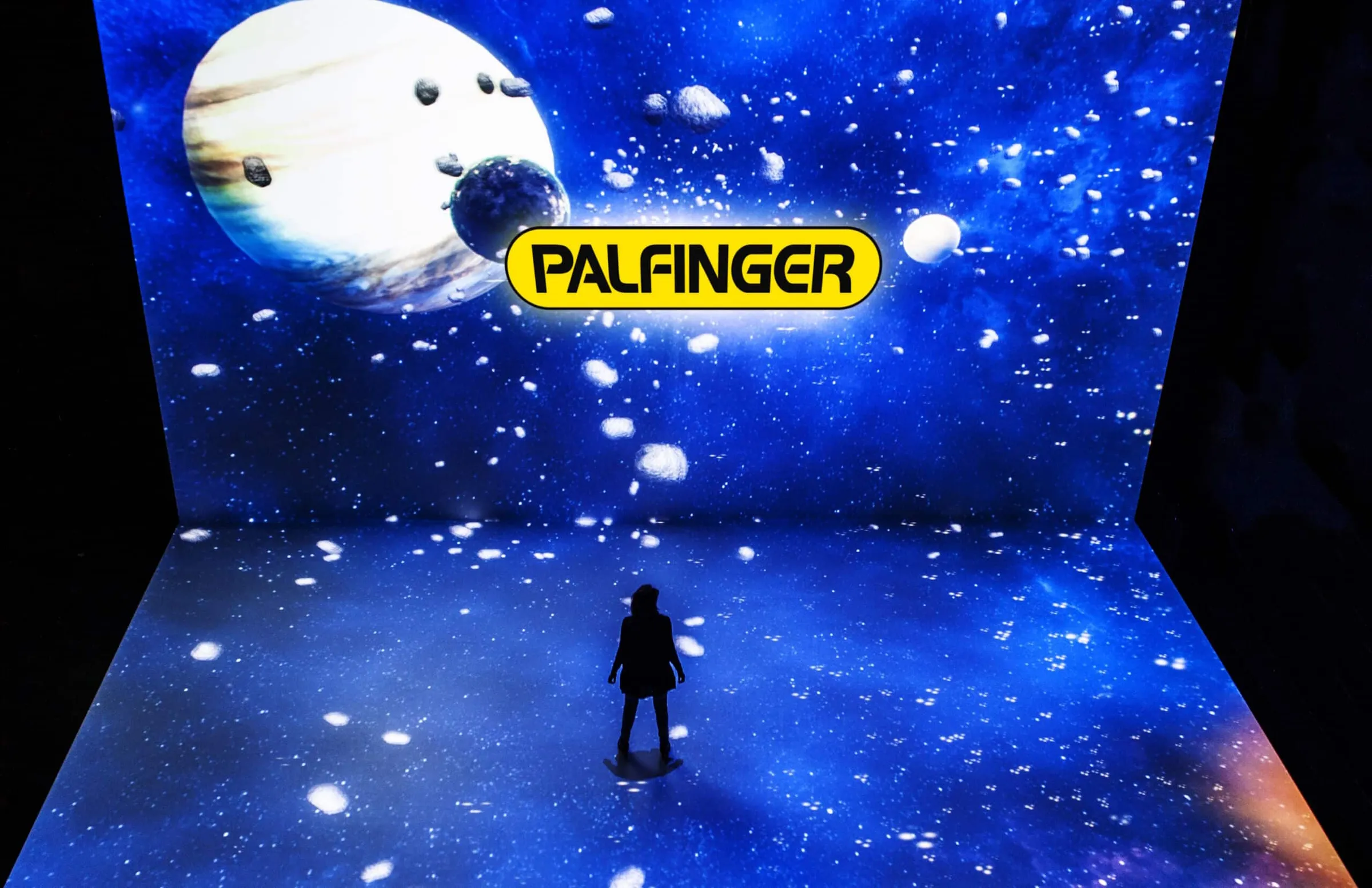
PALFINGER WORLD in Lengau showcases the PALFINGER brand in an exciting and interactive way. This includes a specially developed 3D cinema with wall and floor projections and active stereo 3D technology, designed to allow visitors to explore the brand’s world. PALFINGER WORLD was largely developed and implemented by Ars Electronica Solutions in collaboration with Garamantis. When planning a brand experience, one should not start with exhibits or screens, but with target audiences, usage scenarios and experiences. For it is precisely here that it is determined whether the space will merely make a fleeting impression or have a lasting impact in line with the company’s objectives.
Categorising rooms, media and exhibits correctly
The space is the framework of a brand experience, but rarely the starting point. Architecture, media and exhibits should always be developed on the basis of the concept. Good brand experiences are characterised by the fact that they
- are intuitively understandable,
- support different group sizes and formats,
- reflect varying levels of information requirements,
- are designed to be accessible and easy to maintain,
- function reliably from a technical point of view.
Depending on the objectives, a wide variety of interactive exhibits may be considered: interactive touch tables, screen walls, interactive display cases, projection mapping, hologram installations, and AR or VR stations. What matters is not the number of technologies, but their contribution to the overall experience.
Technology, Integration and Offline Operation
A common weak point in brand experiences is the technical infrastructure. Dependencies on the cloud, a lack of update strategies or poorly chosen infrastructure lead to problems in day-to-day operations.
Sensors, control systems, reliable uptime and defined states are crucial, particularly for multi-sensory spatial experiences. These include, amongst other things:
- simple content updates
- Role and Permission Management in the CMS
- Monitoring and technical surveillance
- Control of individual stations and the entire room
- Interfaces to external systems and data sources
- multilingual content management
- predefined presets for different visitor groups
- Preventing spontaneous updates, e.g. of the operating system
Particularly in the case of interactive showrooms, the ease of maintenance behind the scenes determines whether the content remains up to date and whether the space can continue to be used effectively for years to come.
Assessing measurability and ROI realistically
The success of a brand universe can be measured – though not using traditional KPIs. The following are often more relevant:
- shorter sales cycles
- greater readiness to make a decision following visits
- Quality of conversations and follow-ups
- Follow-up visits to customers and partners
- Overall frequency of use (number of contacts)
- Feedback on the clarity of complex topics
- Use in marketing, sales and recruitment
The impact of a brand universe is often reflected in better-prepared discussions, greater trust and clearer decisions. The success of a brand universe is best measured using trade fair and event KPIs. In addition to quantitative indicators, qualitative surveys of the target groups can also be used.
Budget, Timeline and Project Management
Realistic planning takes several cost categories into account: concept, software, hardware, interior fit-out, content production, integration and day-to-day operations. A comprehensive concept that clearly defines objectives, use cases, technical parameters and operational requirements is particularly important as a first step.
Depending on the scope and structural complexity, a timeframe of at least 12 months up to several years is realistic for many projects – depending on the size and the available space. This is precisely why it is worth defining all requirements at an early stage rather than waiting until the implementation phase to finalise them.
8 Common Mistakes – and How to Avoid Them
The most common reasons why brand identities fail are:
- no clear definition of the target audience
- no comprehensive plan
- lack of narrative logic
- Focus on space rather than the system
- Technical decisions taken too early without a clear vision
- Lack of customisation and lack of presets
- Unclear responsibilities in day-to-day life
- Content is not being updated
If you avoid these mistakes, you will create a brand world that remains relevant and interesting for years to come.
Examples illustrating how brand worlds work today
Modern brand experiences can take many different forms. Some rely on large-scale visual displays, such as immersive spaces, whilst others focus on interactive product presentations or emotional scenarios. What matters is not the format itself, but how well the space, content and technology are aligned with the communication objectives.
In practice, it is clear that brand experiences are particularly successful when they make complex topics understandable, cater to different target audiences and can be flexibly adapted even whilst in operation. This is precisely where their strategic value lies – not just in the presentation, but in their actual usefulness for corporate communications.
A practical example of a brand universe
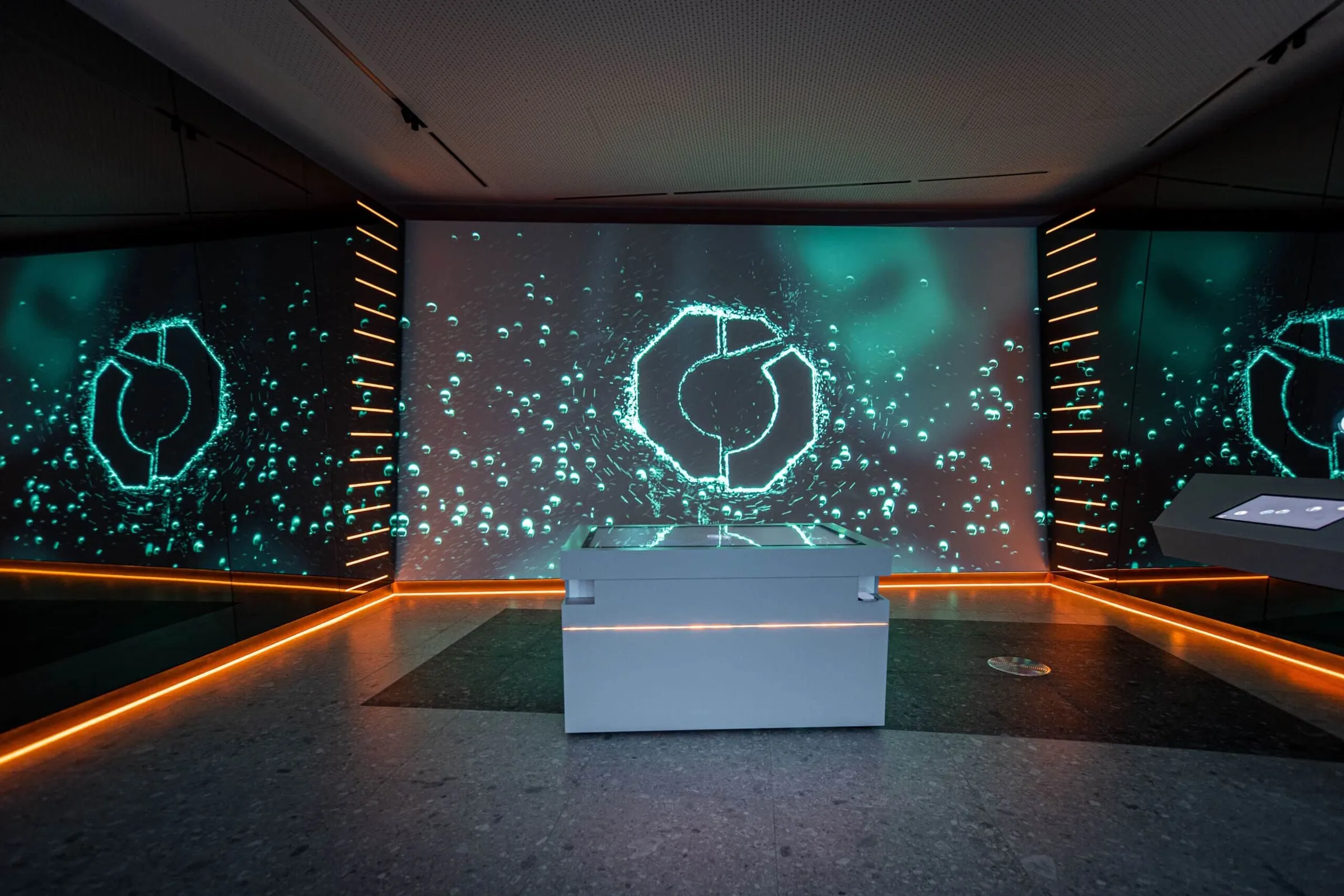
The Wack Group’s interactive corporate showroom even features two of the company’s brands. Thanks to the fully digital presentation, users can switch between the two brands at will. One of the digital stations is an immersive projection controlled via a multi-touch table.A brand’s value is realised not only at the time of its launch, but day in, day out within the organisation. By bringing together the concept, control systems, software, hardware and content at an early stage, you lay the foundations for a space that can be utilised in the long term and delivers measurable results.
Next step: How businesses can get off to a good start
Anyone planning a brand universe should start with these steps:
- Workshop with all stakeholders within the company to define requirements and objectives
- Selection and assessment of available premises
- Development of a creative central concept to serve as a unifying theme for the entire brand universe
- Bringing in experienced consultants or an agency with a proven track record
- Start of concept development and planning
Conclusion: Thinking of brand worlds as living systems
A successful brand world is not a place, but a strategic communication system. It combines space, software, content, exhibits, hardware and people to create an experience that makes an impact – one that is comprehensible, lasting and purposeful.
Companies that understand brand experiences in this way not only create impressive spaces, but also genuine competitive advantages: in sales, brand management and the communication of complex topics. Brand experiences are particularly successful in the long term when the experience, management and operations are conceived as a unified whole.
Garamantis specialises in brand experiences and interactive showrooms. Benefit from our many years of experience and be inspired by a no-obligation video consultation on brand experiences from around the world.
FAQ on Brand Worlds
What is a brand universe in a business context?
A brand experience is a physical space in which a company’s brand, products, services and strategic themes are communicated in an interactive and target-audience-oriented manner. It serves not only as a showcase, but also supports marketing and sales and facilitates decision-making processes. A brand experience brings a company’s corporate identity to life, allowing visitors to explore and experience it for themselves.
For which companies is a brand universe worthwhile?
This is particularly true for companies with products that require explanation, are innovation-driven or are technical in nature. Brand experiences are ideal whenever traditional presentations are not enough and content needs to be brought to life through spatial experiences.
What is the difference between a showroom and a brand experience centre?
A showroom is often more focused on products and presentation. A brand experience is conceived on a broader scale: it combines content, narrative, interaction, technology and operations to create a holistic experience for different target groups.
How long does it take to plan and implement a brand identity?
That depends very much on the scope of the project. For larger projects involving spatial design, audiovisual technology, software and content production, a lead time of several months is usually required for concept development. Implementation often takes a year or longer.
What role does software play in brand ecosystems?
A central software system controls content, stations, presets, lighting and audio – and thus the entire space. Without a good control and content management system, a brand experience quickly becomes inflexible in practice.
How do brand worlds stay relevant in the long term?
Through clear content governance, defined responsibilities and, above all, regular updates. Successful brand experiences are continuously developed; they are not simply created once and left at that.
Can brand experiences function without an internet connection or reliance on the cloud?
Yes. In corporate environments in particular, locally running systems, controlled updates and robust operating models are essential.