
Showroom design for interactive brand and product experiences
- Showroom
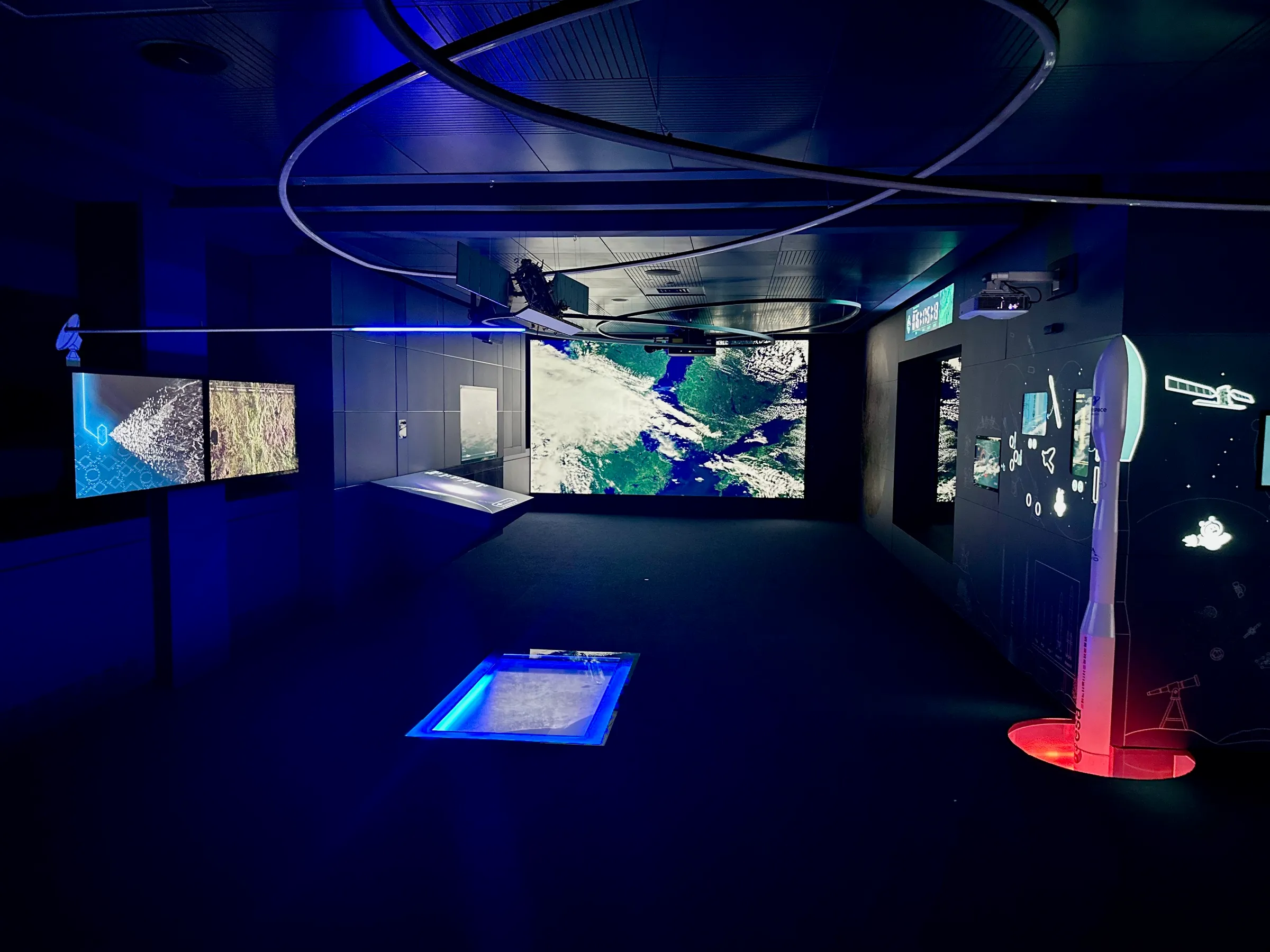
Showroom design is at its best when visitors do not merely see something, but understand the context, try out products and experience brand values in a physical space. This is precisely where an interactive showroom differs from traditional shopfitting: it is not about shelves, decoration and display areas. It’s about a robust concept that combines creative ideas, spatial design, content, hardware, software, lighting, sound and operations to create a seamless experience.
Garamantis develops interactive showrooms for businesses, bringing together content, software, media, hardware and spatial design. The interactive showroom solution and the project overview provide an insight into this.
Showroom design starts with a robust concept
A good showroom design first answers the question: What should visitors have understood, experienced and remembered after their tour? Only then does the question of technology, furniture, displays or materials come into play.
The concept is the be-all and end-all of any project. It translates vague ideas into a concrete experiential framework: Which target groups will be visiting the space? Which elements require explanation? Which stations drive the narrative? Which interactions lead to genuine learning? Which hardware is worthwhile – and which would simply be a waste of money?
It is only with this approach that a timetable, a realistic budget and a clear framework for all the trades involved can be established. Anyone who buys hardware too early risks ending up with isolated systems. Those who plan first save themselves the hassle of coordination, modifications and unnecessarily expensive technology later on.
When is an interactive showroom a good idea?
An interactive showroom is particularly worthwhile when products, services or technologies are complex, require explanation or are difficult to explain. This often applies to the B2B sector, for example in mechanical engineering, energy, mobility, chemicals, medical technology, digitalisation, research, security, infrastructure or industrial services.
The space can support sales meetings, showcase innovations, welcome customers, win over investors, train staff or help partners reach a common understanding. It is important that the showroom does not look like a conventional exhibition space full of screens. In terms of both content and architecture, it should blend in with the company and the building.
From the showroom idea to the concept: what needs to be clarified before planning begins
Many companies start out with vague ideas in mind: futuristic, high-quality, digital, impressive. That’s a good start, but it’s not yet a concept. The real work begins when ideas are prioritised and translated into a functional customer journey.
A structured process is helpful. In his article ‘7 Steps to a Showroom Concept’, Garamantis outlines key milestones ranging from needs analysis and budgeting through to implementation, the testing phase and optimisation.
Conceptual question
Why it is important
Who visits the showroom?
The target audience, prior knowledge, language, group size and duration of the visit determine the programme structure and how the exhibition is run.
What message should stick in people’s minds?
The space needs a clear guiding concept rather than a collection of individual effects.
What topics are difficult to explain?
It is precisely this kind of content that is often suitable for interactive stations, simulations or demonstrators.
What role does sales play?
Guided tours, self-guided visits and personalised presentations each have different requirements.
Which trades are involved?
IT, shopfitting, interior design, media technology, content, security and operations must be considered together at an early stage.
How does the showroom keep up to date?
CMS, maintenance, content updates and support are key to the system’s long-term value.
Showroom ideas: interactive stations that bring content to life
Good showroom stations aren’t created from technical specifications, but from content. A station should always serve a specific purpose: to explain, compare, simulate, engage, personalise or summarise a story.
Possible elements of an interactive showroom design include:
- Multitouch tables where visitors can explore products, processes or scenarios together.
- Screen walls that combine large-format content with interaction at the table.
- AR and VR stations for products, facilities or spaces that are difficult to access in reality.
- Sensory exhibits that respond to proximity, objects, gestures or inputs.
- Data and simulation stations that visualise complex relationships in real time.
- Lighting and sound effects that guide the audience through the space in a dramatic way and evoke emotion.
- Flexible presentations that allow content to be tailored to target audiences, the purpose of a visit or sales stages – via a content management system.
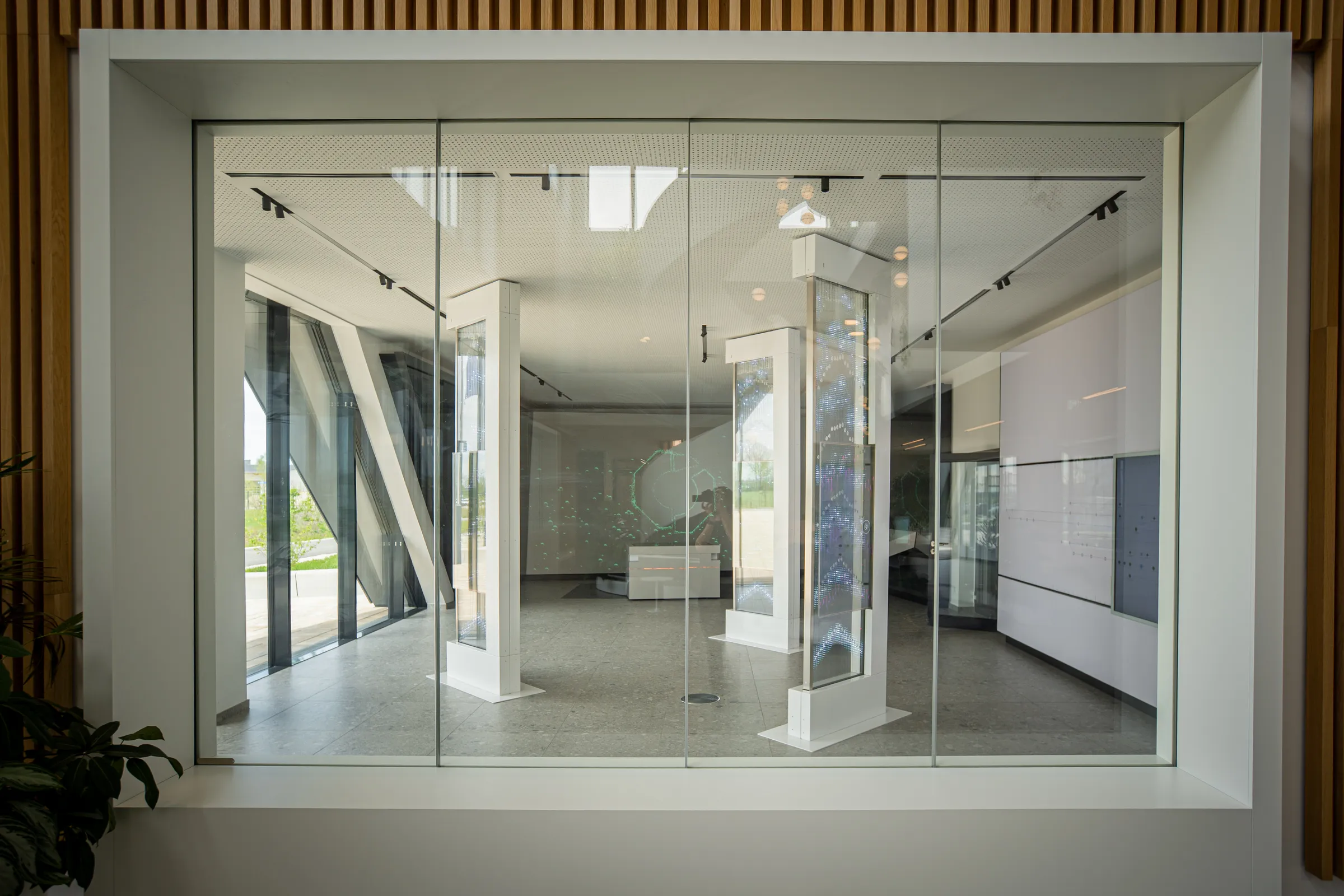
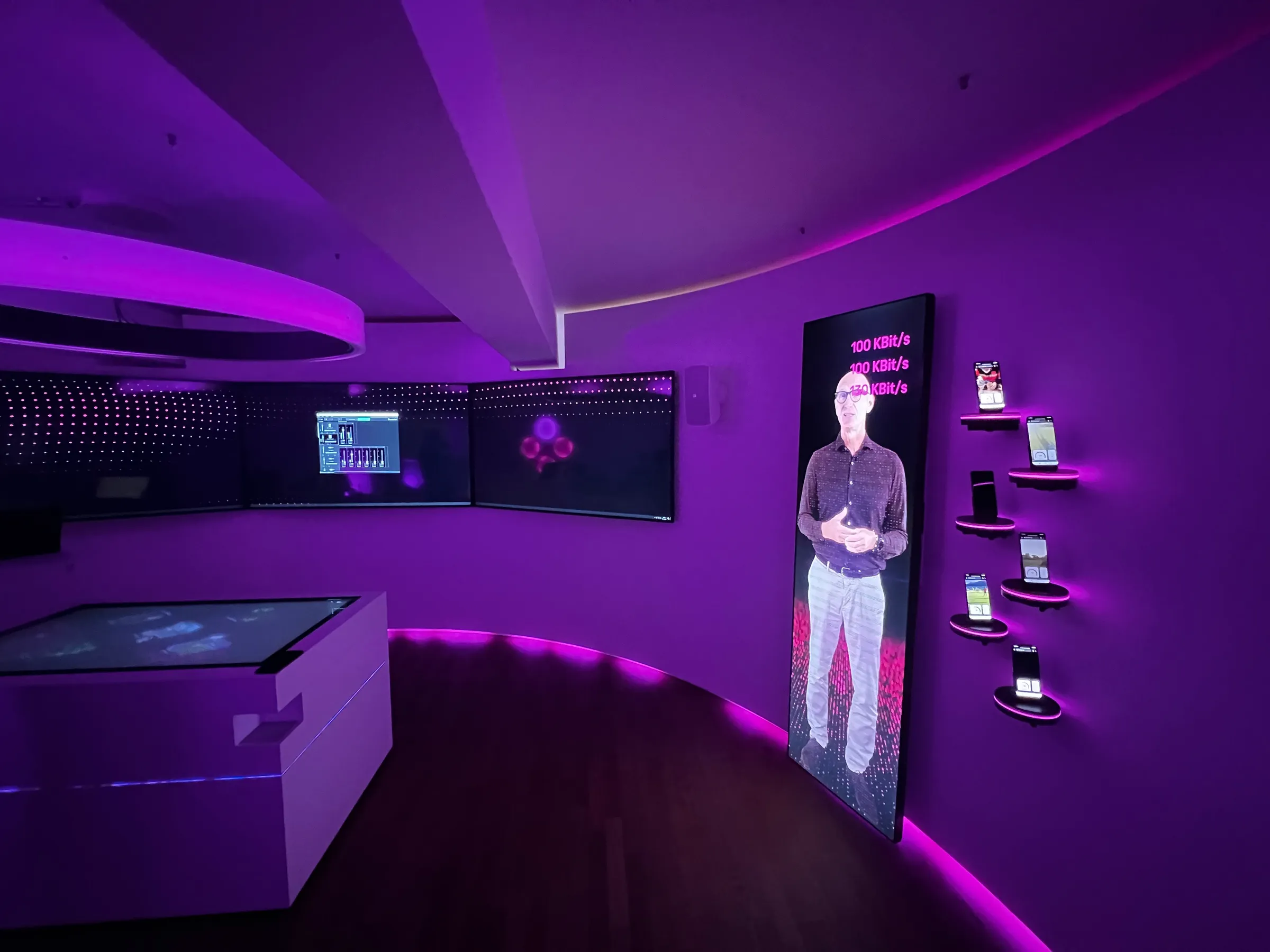
The Wack Group Showroom demonstrates just how customisable such stations can be: there, analogue and digital elements merge in a newly developed 3-layer display. The FFT Production Systems Showroom brings production systems, robotics and AR/VR to life in a futuristic exhibition area. In the Telekom Experience Showroom, media technology, a central control system and a CMS are integrated. The Zeemobase Showroom demonstrates how an interactive media table and a media wall make complex systems easy to understand.
Planning a showroom: integrating technology, space and operations
The planning follows the concept. It encompasses the technical planning of the individual stations, as well as interfaces with IT, shopfitting, interior design, lighting, audio, security and content production.
In interactive showrooms, this integration work is crucial. A screen wall requires more than just displays. It needs suitable content, computing power, control systems, cable routing, access for maintenance, a network, sound, lighting and a user interface that visitors can understand intuitively.
When it comes to the interaction itself, it is worth adopting a user-centred approach. The ISO 9241-210 standard describes human-centred design for interactive systems. Digital content should also be designed to be accessible in accordance with the W3C’s WCAG 2.2 guidelines. For the built environment, DIN EN 17210 sets out functional requirements for accessibility and usability.
In practice, this means that touchpoints must be accessible, text must remain legible, navigation paths must be clear, lighting must not be dazzling, and presentations must work in real-life visitor situations. A showroom is not a static space that is ever ‘finished’. Rather, it is a space that must be used, explained, operated and updated on a daily basis.
Why choose Garamantis as your showroom agency?
Garamantis is an agency specialising in interactive experience spaces, not standard shopfitting. The team combines concept, design and technical implementation. This results in fewer points of interface between the idea, the design, the software, the hardware and operations.
This full-service approach is particularly valuable when clients initially have only vague ideas. Starting with concepts such as ‘futuristic’, ‘functional’ or ‘interactive’, a concrete space takes shape step by step: with a guiding principle, stations, user experience, media logic, technical architecture and a robust implementation plan.
This is particularly relevant for B2B companies with complex content. In such cases, individual visits often determine whether large orders are secured, new partnerships are formed or an investment is made. On the ‘Showrooms for Businesses’ page, Garamantis showcases various applications and case studies from corporate and product presentations.
The advantage of bringing in an experienced agency lies not only in the creative concept. It lies in translating that concept into a technical system that works within the space: bespoke, fast, cost-effective and tailored to the company.
Costs and timetable: Why the concept saves money
Many showroom projects end up being expensive because they jump to individual decisions too early: a large LED wall, a specific table, a VR setup, a hologram. Individual elements can make a strong impression, but without an overall concept, gaps can quickly emerge: content doesn’t match the hardware, operation is too complicated, the necessary structural requirements are missing, or subsequent updates become a major undertaking.
A good showroom concept saves money because it provides a sound basis for decision-making. It clarifies which stages are truly necessary, which aspects of the business need to be prepared, which trades need to be involved and when, and which technical solution is viable in the long term.
Even impartial sources on digitalisation warn against rushing into things: the Mittelstand-Digital Centre in Berlin recommends that, when setting up digital showrooms, one should first consider target audiences, use cases and the customer journey. This approach applies all the more to interactive physical spaces.
The result: a showroom that reflects the company’s identity
A strong showroom does not have to be more expensive, larger or more technically sophisticated than the competition. It simply needs to be precisely tailored to the target audience. It should bring the brand to life in the space, make complex content easy to understand and give visitors a reason to remember it.
This requires a showroom design that brings together the concept, design, interaction and technical implementation. Garamantis supports companies from the initial idea through to the concept, implementation and ongoing operation.
Are you planning an interactive showroom or would you like to explore some initial ideas? If so, it’s worth taking a look at the project overview – or getting in touch directly via the contact page.
FAQ: Frequently Asked Questions about Showroom Design
What is showroom design?
Showroom design is the strategic, spatial, creative and technical development of an exhibition space. In the case of interactive showrooms, it encompasses not only architecture and design, but also storytelling, visitor guidance, hardware, sensor technology, software, content, lighting, sound, IT and operations.
How is a showroom concept developed?
A showroom concept is developed based on target audiences, messages, spatial possibilities, exhibits, ideas for interaction and technical requirements. It outlines the experiences visitors will go through, the different stations that will be created, the content required and the technology that is most appropriate.
How long does it take to plan an interactive showroom?
The duration depends heavily on the scope, the proportion of construction work, the technology, the content and the amount of coordination required. A realistic timetable can only be drawn up once a robust concept is in place. For large-scale corporate showrooms, a period of between 6 and 12 months for planning and implementation is realistic.
What hardware does an interactive showroom need?
Typical hardware includes multi-touch tables, screen walls, projections, sensor technology, AR or VR set-ups, lighting and sound equipment, media servers, control systems and network technology. The choice of hardware should be determined by the concept and should not be fixed at the outset.
How much does an interactive showroom cost?
The costs depend on the size of the room, the number of stations, the level of customisation, software development, hardware, content, building works and operations. A well-thought-out concept reduces unnecessary purchases, makes it easier to compare budgets and lays the foundations for a robust cost plan.
Why is Garamantis a suitable showroom agency?
Garamantis combines concept, design, bespoke software, hardware development, technical planning, system integration and operations. This results in fewer interfaces, less friction and a showroom in which the interactive stations are harmoniously integrated, both in terms of content and layout.
Why shouldn’t you buy hardware first?
This is because hardware without a concept is often too expensive, too large, too complicated or unsuitable in terms of content. Only the concept reveals which technology truly underpins the experience, what content is required, and how the stations can be meaningfully integrated into the space, IT systems and operations.