
Showrooms for businesses – definition, objectives and benefits
- Showroom
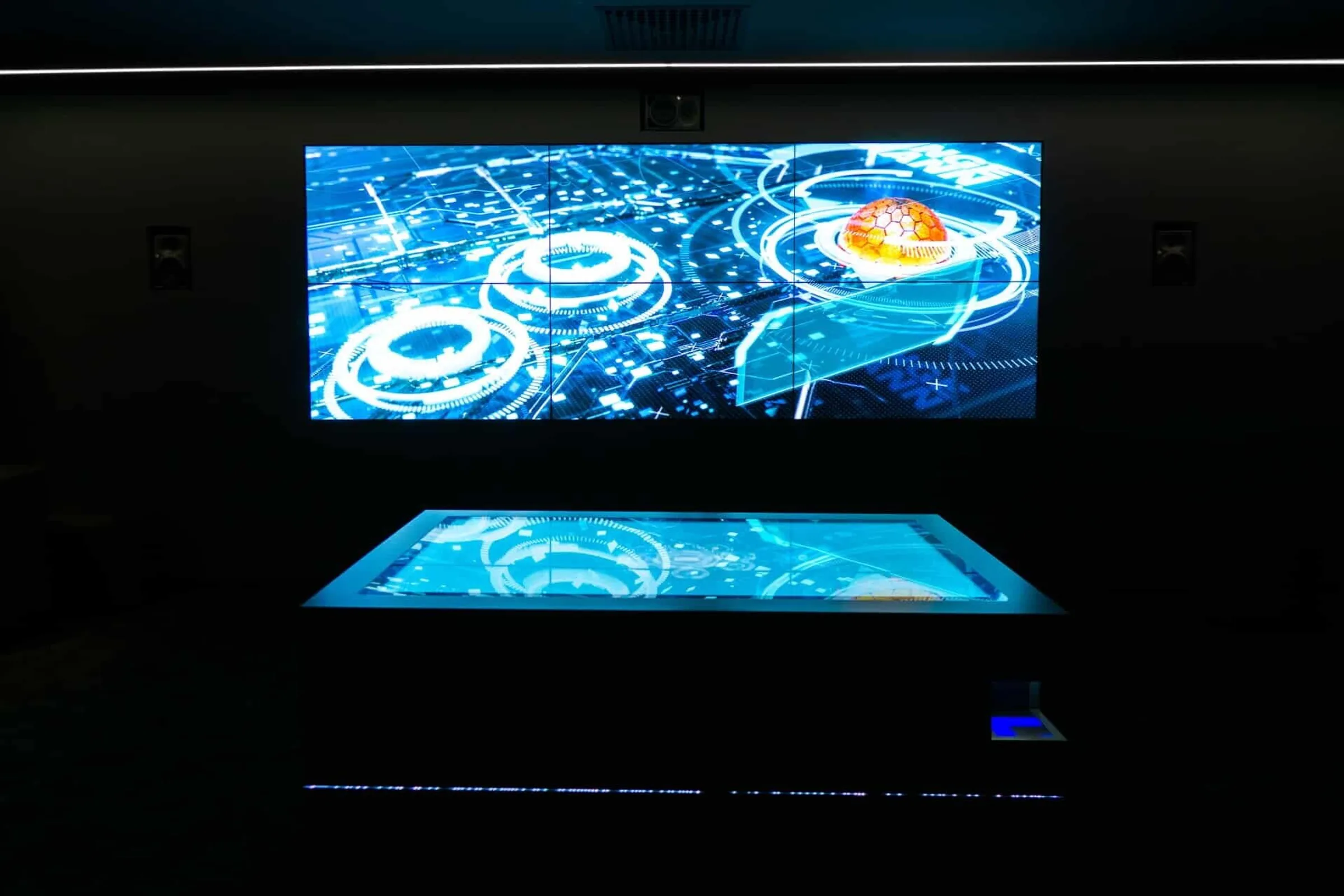
What is a showroom? Definition
A showroom is an interactive experience space in which your company’s messages, services and products are presented in a clear and particularly appealing way. Ideally, it impresses and inspires its visitors not only through its content, but also through innovative and creative forms of presentation. These include, for example, intuitive access and the playful presentation of information, as well as a carefully thought-out layout tailored to your target audiences. So much for the definition. However, when you step into your perfectly designed and beautifully executed showroom for the first time, you will see one thing above all else: your company’s identity.
Objectives and use cases of a showroom:
- Communicateyour brand’s valuesin a compelling way.
- Tell your company’s story in a way that captures your target audience’s attention.
- Keep your stakeholders informed and inspired.
- Showcase your product range and highlight your USP.
- Engagewith your target audiencesdirectly and in a lasting way.
- Generate connection contacts.
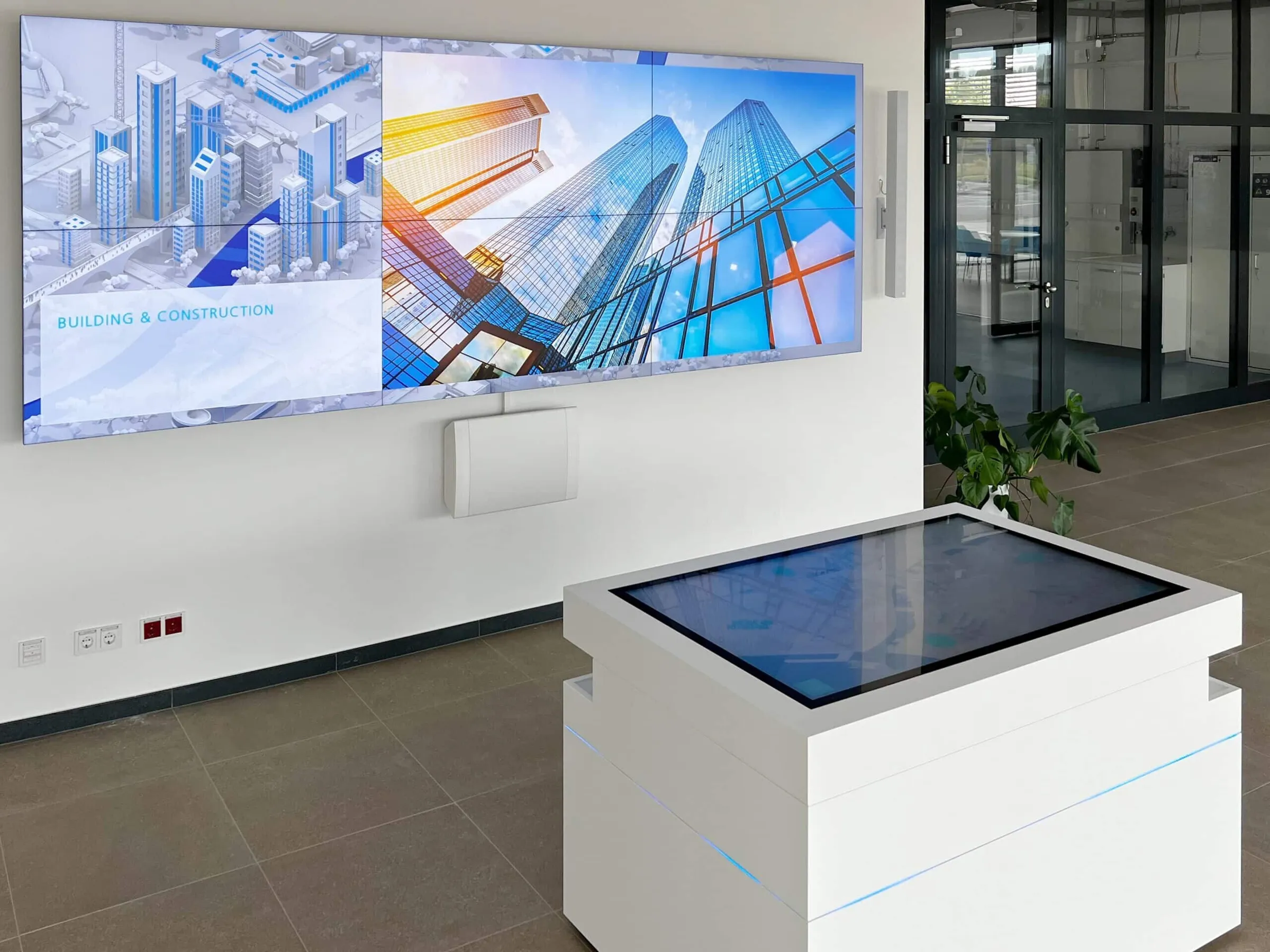
Interactive company presentations featuring a video wall and touch table in the Daikin showroom
4 good reasons to have a showroom:
1. One room to suit them all
You are probably thinking primarily of target groups such as customers, prospective customers and investors when it comes to your showroom. In fact, however, you can also use your showroom to inform and inspire existing and future staff, partners, suppliers, politicians, members of the press and other target groups.
2. No trade fairs? No problem!
In these times of the pandemic, with no trade fairs or events taking place, it is particularly worthwhile to invite people specifically to your own showroom. Here, you can offer a safe, exclusive setting for your presentations and can even give your guests more attention than would be possible at a trade fair. And, incidentally, they can give you the same in return.
3. Not only beautiful, but also quite profitable
Carefully planned and featuring a varied programme of events, a showroom can quickly become a significant source of revenue. A permanent programme of events ensures a steady stream of contacts. And thanks to an impressive live touchpoint, these contacts are remembered positively for a long time to come.
4. Show your business at its best. From every angle
Values, visions and innovation are difficult to convey effectively via Zoom or PowerPoint. In a showroom, you can use multimedia to immerse your target audiences in your world of experience, engaging all their senses.
Tip: A marathon, not
a sprint. Successful corporate showrooms require a significant investment as well as ongoing maintenance and upkeep. You should therefore ensure that you meet all the basic requirements during the planning and implementation stages, so that the end result contributes as much as possible to your business objectives. A long-term approach pays off in the truest sense of the word.
This blog post is an extract from our comprehensive white paper, ‘Successfully Planning and Implementing Showrooms for Businesses – A Guide from “HOW” to “WOW”’. If you would like to receive a free copy of the white paper, please send an email with the subject line ‘White Paper: Showroom’ to [email protected].
Frequently asked questions about showrooms for businesses
What is a showroom?
A showroom is an exhibition space where companies showcase their products, services or brands. Modern showrooms often combine spatial design with digital media and interactive applications to make content easy to understand and bring it to life.
What makes a good showroom?
A good showroom combines clear messaging, intuitive visitor guidance and compelling design. Digital and interactive elements should not only impress, but also make the content easier to understand and enhance the brand experience.
What is an interactive showroom?
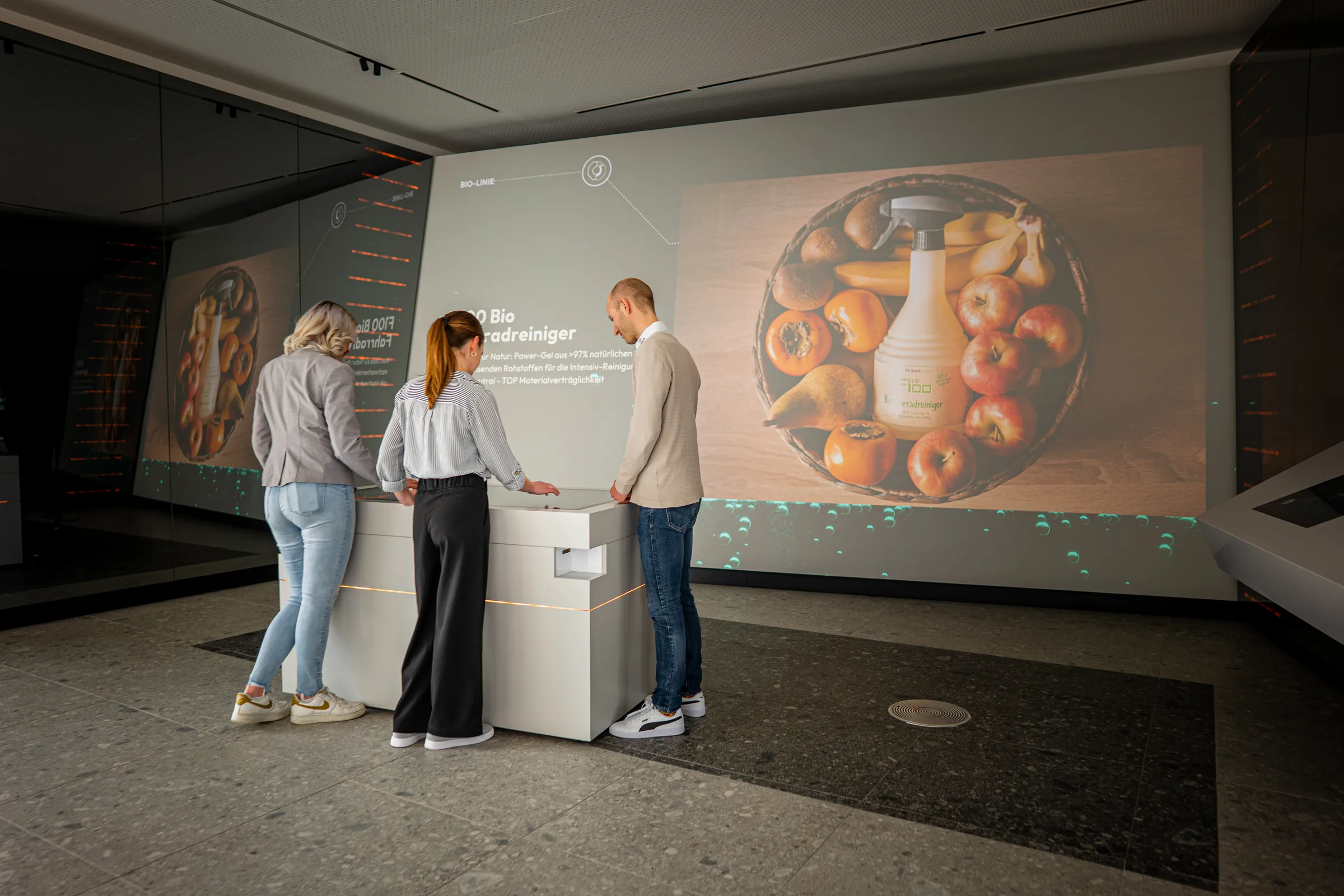
An interactive showroom enables visitors to actively explore and control content. To this end, touchscreens, multi-touch tables, media walls, sensors and interactive 3D applications, for example, are used.
What are the advantages of a showroom?
A showroom brings products, technologies and brands to life. It can support advisory services and sales, explain complex concepts in a more accessible way, and even showcase products that are not physically available on site.
What exactly is a showroom?
A showroom is a space designed specifically for the presentation of products, services or brand content. Particularly in the B2B sector, it often serves as a combination of an exhibition space, a consultation room and an interactive experience area.
What is the showroom concept?
The showroom concept describes how content, space, media and visitor flow interact. It defines target audiences, messages, storytelling, design and the appropriate digital or interactive applications.
What is the showroom effect?
The term ‘showroom effect’ can have various meanings. In the retail sector, it often refers to customers viewing products in-store and then buying them online later. In the context of corporate showrooms, it can also refer to the impact of a professional product and brand presentation.
What are the advantages of having a showroom in B2B sales?
A B2B showroom helps to present products and technologies that require explanation in a clear and engaging way. It supports consultation meetings, makes complex concepts easier to understand and creates a consistent environment for product and brand communication.
How do you design an exhibition space?
An exhibition space should first be planned with the target audience, the messages to be conveyed and the desired visitor experiences in mind. On this basis, the layout, visitor flow, exhibits, media, lighting and interactive features are determined.